

Introduction
In the highly specialized world of high-performance automotive manufacturing, materials dictate capability. When it comes to the crucial connection between a vehicle and the road, the wheels must endure extraordinary dynamic forces—from extreme cornering G-loads and brutal pothole impacts to massive rotational speeds and intense brake heat. To survive and thrive in this environment, ordinary metals simply will not suffice.
Enter 6061-T6 aluminum.
Often referred to as “aerospace-grade aluminum” because of its extensive use in aircraft fuselages and wings, 6061-T6 is the undisputed gold standard in the forged wheel industry. Whether you are outfitting a 1,000-horsepower hypercar, building a rugged off-road overland vehicle, or sourcing premium inventory for your automotive distribution network, this specific alloy is the foundation of world-class wheel manufacturing.
As a premier OEM wheel supplier, CN Wheel Rims (CNWR) relies exclusively on premium 6061-T6 aluminum to engineer our custom forged wheels. In this comprehensive guide, we will explore the exact metallurgical properties of 6061-T6, compare it against other common automotive alloys, and explain why it is the only material B2B buyers and performance enthusiasts should trust.
What Exactly is 6061-T6 Aluminum?
To understand why 6061-T6 is so revered, we must break down its name. In the aluminum industry, the four-digit number designates the alloying elements, while the suffix indicates the specific heat treatment or temper the metal has undergone.
The 6000-Series Alloy: Magnesium and Silicon
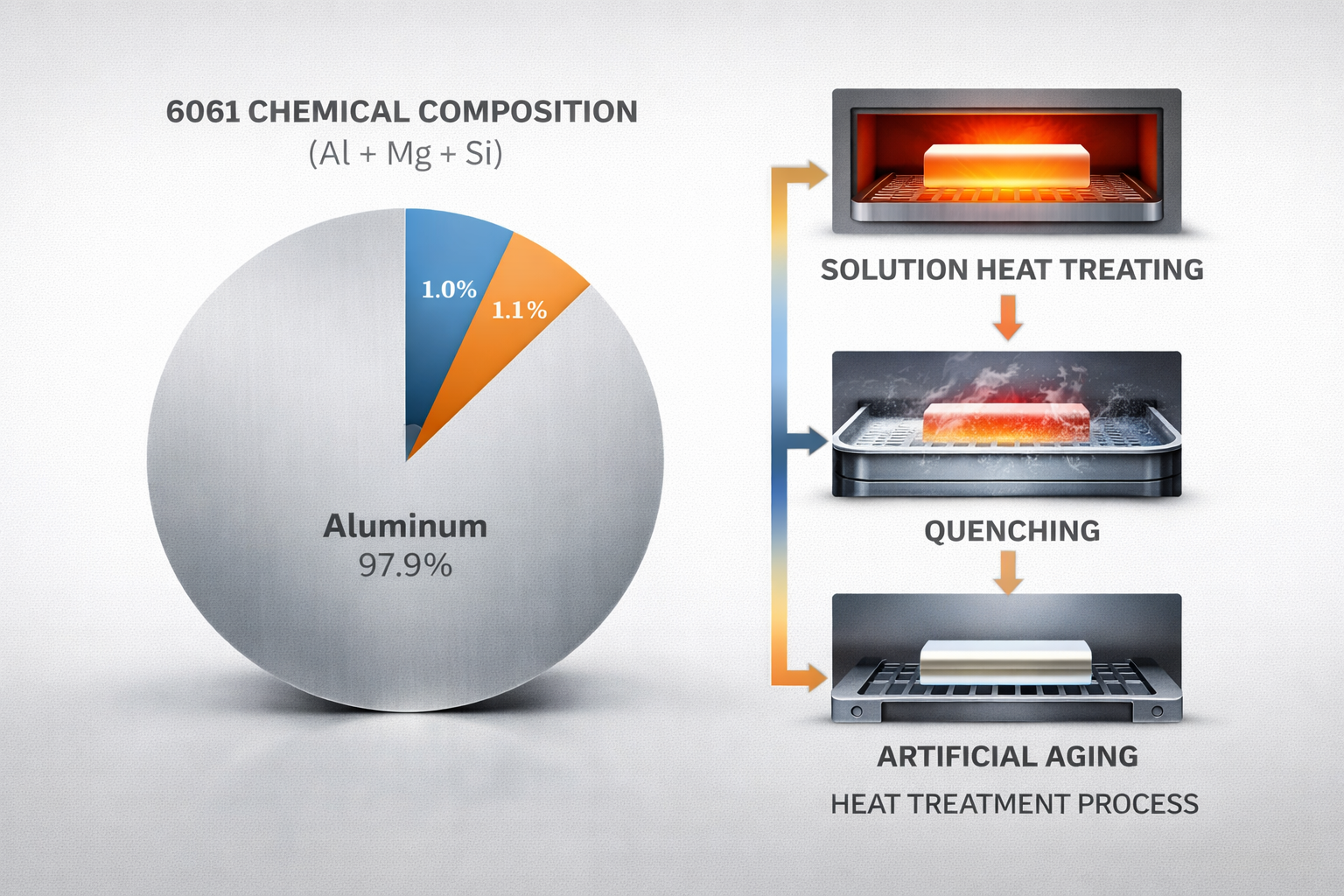
The “6061” designation places this metal in the 6000-series of aluminum alloys. The primary alloying elements added to the pure aluminum base are magnesium and silicon.
-
Magnesium drastically increases the material’s strength while maintaining a very low weight.
-
Silicon lowers the melting temperature and improves the alloy’s fluidity during the initial forging process, while also significantly enhancing its resistance to corrosion.
This specific chemical composition makes 6061 highly workable, weldable, and incredibly receptive to the intense physical deformation required during the wheel manufacturing process.
Understanding the “T6” Temper
An alloy’s chemical makeup is only half the story. The “T6” suffix is where the true magic happens. T6 refers to a highly specific, multi-stage heat treatment process:
-
Solution Heat Treating: The raw forged aluminum is heated to over 500°C (930°F). This causes the alloying elements (magnesium and silicon) to dissolve uniformly into the aluminum matrix.
-
Quenching: The intensely hot metal is rapidly cooled, usually by plunging it into water. This “freezes” the alloying elements in place, preventing them from separating.
-
Artificial Aging: The metal is then reheated to a lower temperature (around 160°C to 175°C) for several hours. This controlled aging precipitates microscopic alloying particles, locking the crystalline grain structure into an incredibly dense, rigid formation.
The result of the T6 temper is a massive exponential increase in the metal’s yield strength and structural integrity.
The Metallurgical Superiority of 6061-T6 in Wheel Manufacturing
Why do premier forged wheel manufacturers like CNWR exclusively utilize 6061-T6? The answer lies in three core metallurgical advantages that perfectly align with automotive demands.
1. Unmatched Strength-to-Weight Ratio
In automotive engineering, weight is the enemy of performance—specifically unsprung mass (the weight of components not supported by the suspension, like wheels and tires). 6061-T6 aluminum possesses an extraordinary strength-to-weight ratio. It allows our engineers at CNWR to design wheels with incredibly thin spokes and aggressively deep hub pockets. Because the material is so dense and strong, we can mill away maximum material on our CNC machines without compromising the wheel’s load rating, resulting in ultra-lightweight performance wheels.
2. Incredible Yield Strength and Durability
Yield strength is the amount of stress a material can take before it permanently bends or deforms.
-
A standard A356 cast aluminum wheel typically has a yield strength of around 165 MPa (24,000 psi).
-
A fully treated 6061-T6 forged aluminum billet boasts a yield strength of approximately 276 MPa (40,000 psi), with an ultimate tensile strength exceeding 310 MPa (45,000 psi).
For a driver, this means a 6061-T6 forged wheel can absorb violent impacts from track curbing or highway potholes that would instantly crack or shatter a cast wheel. When subjected to failure-level stress, 6061-T6 is designed to bend rather than fracture, which is a critical safety feature that prevents catastrophic tire blowouts.
3. Exceptional Machinability and Finish Quality
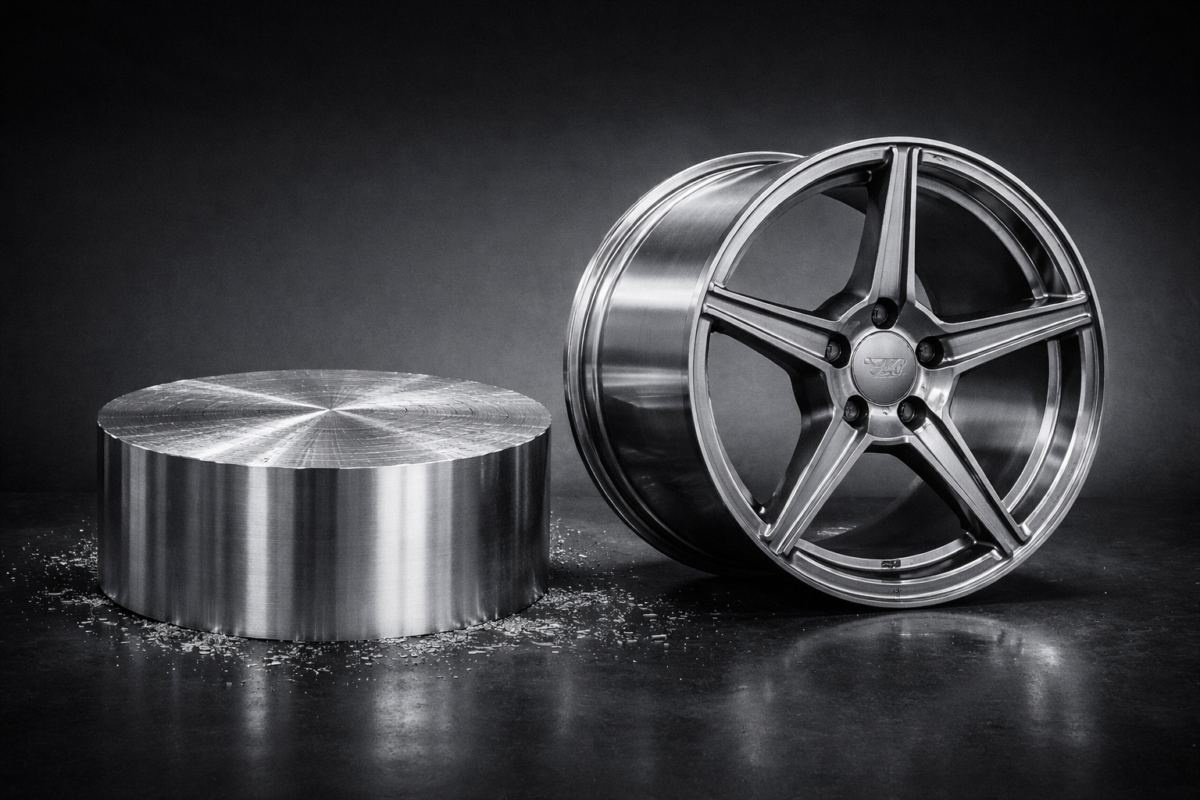
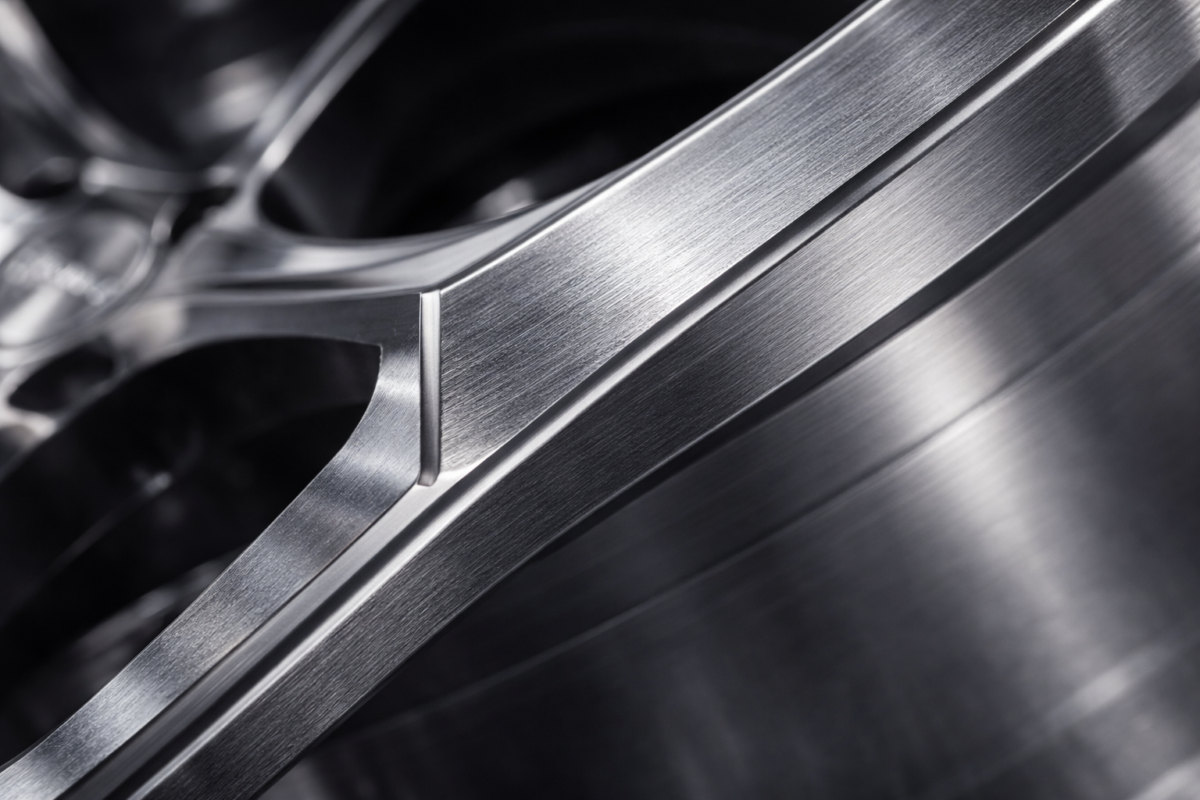
Because it is not brittle, 6061-T6 machines beautifully. When placed in our 5-axis CNC mills, the cutting tools shear the metal cleanly, leaving a flawless, mirror-smooth surface. This superior machinability is what allows for the razor-sharp chamfers, intricate spoke details, and perfect center bore fitments that define premium custom forged wheels. Furthermore, it readily accepts premium finishes, including brilliant anodizing, vibrant powder coats, and hand-brushed transparent clear coats.
6061-T6 vs. Other Aluminum Alloys in the Auto Industry
To fully appreciate 6061-T6, it is helpful to compare it to other common materials you will encounter in the wheel and automotive parts market.
| Feature | A356-T6 Aluminum (Cast Wheels) | 6061-T6 Aluminum (Forged Wheels) | 7075-T6 Aluminum (Aerospace/Military) |
| Manufacturing Method | Molten pour into mold | Solid billet pressed under extreme heat/pressure | Solid billet (rarely used for wheels) |
| Yield Strength | ~165 MPa | ~276 MPa | ~503 MPa |
| Porosity Risk | High (Microscopic air pockets) | Zero (Dense, aligned grain structure) | Zero |
| Machinability / Finishing | Poor to Moderate | Excellent (Ideal for complex CNC designs) | Fair (Harder on tooling, difficult to polish) |
| Brittleness / Failure Mode | High (Prone to cracking/shattering) | Low (Bends upon extreme impact) | High (Very stiff, but can crack under repeated cyclic fatigue) |
| Primary Use Case | Budget OEM and aftermarket wheels | Premium performance and luxury forged wheels | Aircraft structures, weapon receivers |
Why Not Use 7075 Aluminum for Wheels?
A common question from enthusiasts is: “If 7075 aluminum is stronger than 6061, why aren’t the best wheels made from 7075?” While 7075-T6 (which uses zinc as its primary alloying agent) has a higher ultimate tensile strength, it is significantly more brittle and has lower corrosion resistance than 6061. In a wheel application, wheels are subjected to constant cyclic fatigue and harsh environmental elements (road salt, brake dust, moisture). 7075 is more prone to microscopic stress-corrosion cracking over time. Furthermore, it is incredibly difficult to apply cosmetic finishes like anodizing to 7075. 6061-T6 provides the perfect “Goldilocks” balance of massive strength, high elasticity, and stunning cosmetic potential.
How CNWR Transforms 6061-T6 into Custom Forged Wheels
Sourcing the best raw material is only the beginning. At cnwheelrims.com, our proprietary wheel manufacturing process maximizes the physical properties of 6061-T6.
-
The Billet Sourcing: We source only the highest purity, aerospace-certified 6061-T6 aluminum logs, ensuring zero metallurgical impurities.
-
The 10,000-Ton Forging Press: The raw billet is heated and crushed in a massive 10,000-ton hydraulic press. This aligns the internal grain structure of the aluminum so that it flows continuously with the shape of the wheel face and barrel. This directional grain flow is the secret to forged strength.
-
Spin-Forging (Flow Forming): For multi-piece barrels or specific monoblock designs, the heated forging is spun at high speeds while hydraulic rollers stretch the barrel to its final width, further compressing the grain structure.
-
Precision CNC Machining: The solid blank is transferred to our state-of-the-art CNC machining centers, where the bespoke design—whether a lightweight track monoblock or an intricate 3-piece VIP face—is meticulously carved out.
Why Distributors Must Specify 6061-T6
For B2B buyers, wheel distributors, and aftermarket tuning shops, the material composition of your inventory is a direct reflection of your brand’s integrity. Partnering with a professional OEM wheel supplier like CNWR that guarantees genuine 6061-T6 construction offers distinct commercial advantages.
1. Eliminating Warranty Claims and Liability
Selling cheap, cast alloy wheels or subpar “flow-forged” imitations comes with high liability. Cast wheels are prone to cracking under daily driving conditions, leading to angry customers, costly warranty returns, and potential safety liabilities. By exclusively offering true 6061-T6 forged wheels, distributors provide a product engineered to last a lifetime, virtually eliminating structural failure claims.
2. Meeting Global Safety Certifications
High-end clientele demand proof of safety. Because 6061-T6 handles stress so predictably, wheels manufactured by CNWR easily pass the most brutal global testing standards, including TÜV (Germany), JWL (Japan), and VIA. Offering certified wheels opens doors to international markets and high-end dealership partnerships.
3. Premium Positioning and High Profit Margins
True forged wheels are a premium luxury/performance product. By marketing the aerospace-grade nature of 6061-T6, B2B distributors can command higher retail prices and secure significantly larger profit margins compared to moving high volumes of low-margin cast wheels. Furthermore, utilizing CNWR’s comprehensive OEM/ODM services allows you to launch your own exclusive brand of 6061-T6 wheels without the multi-million dollar overhead of building a factory.
Practical Insights for Performance Car Owners
If you are a consumer contemplating the upgrade to custom forged wheels, the 6061-T6 advantage translates to immediate, noticeable improvements from the driver’s seat.
-
Transformative Handling: Shedding 5 to 10 pounds per wheel reduces unsprung mass, allowing your suspension dampers to react much faster to road imperfections. The car will feel lighter, more nimble, and significantly more planted in corners.
-
Faster Acceleration and Braking: Reducing rotational inertia means your engine expends less energy turning the wheels, and your brake calipers expend less energy stopping them.
-
Superior Brake Clearance: Because 6061-T6 is so strong, spoke profiles can be machined exceptionally thin. This provides massive internal clearance, allowing owners to install oversized aftermarket Big Brake Kits (BBK) without requiring dangerous wheel spacers.
Frequently Asked Questions (FAQs)
Is 6061-T6 aluminum good for daily driving?
Absolutely. In fact, it is arguably the best material for daily driving. Its high yield strength makes it incredibly resilient against pothole damage, bent rims, and road hazards that typically destroy standard cast OEM wheels.
How much lighter is a 6061-T6 forged wheel compared to a cast wheel?
Depending on the specific design and size, a 6061-T6 forged wheel can be anywhere from 20% to 35% lighter than a cast wheel of the exact same dimensions, often saving 5 to 15 pounds per corner.
Can 6061-T6 aluminum wheels be repaired if damaged?
Yes. Because 6061-T6 is highly elastic, minor bends to the inner barrel (often caused by severe potholes) can usually be safely straightened by a professional wheel repair specialist using localized heat and hydraulic pressure. Conversely, cast wheels will usually crack when attempts are made to straighten them.
Are all forged wheels made of 6061-T6?
While 6061-T6 is the industry standard for reputable, high-end wheel manufacturers, not all wheels marketed as “forged” use it. Some budget brands use inferior alloys or use misleading terms like “rotary forged” for wheels that are actually just cast centers with flow-formed barrels. Always verify the exact alloy with your OEM wheel supplier.
Conclusion
The superiority of a custom forged wheel does not happen by accident; it begins at the molecular level. Aerospace-grade 6061-T6 aluminum provides the ultimate canvas for engineering excellence, offering a flawless balance of feather-light weight, unyielding strength, and stunning cosmetic versatility.
Whether you are navigating the apex of a racetrack, customizing a world-class luxury vehicle, or building a profitable B2B distribution network, compromising on materials is not an option.
At CN Wheel Rims (CNWR), we leverage decades of manufacturing expertise, cutting-edge CNC technology, and the finest 6061-T6 aluminum on earth to produce wheels that redefine automotive performance.