

Introduction
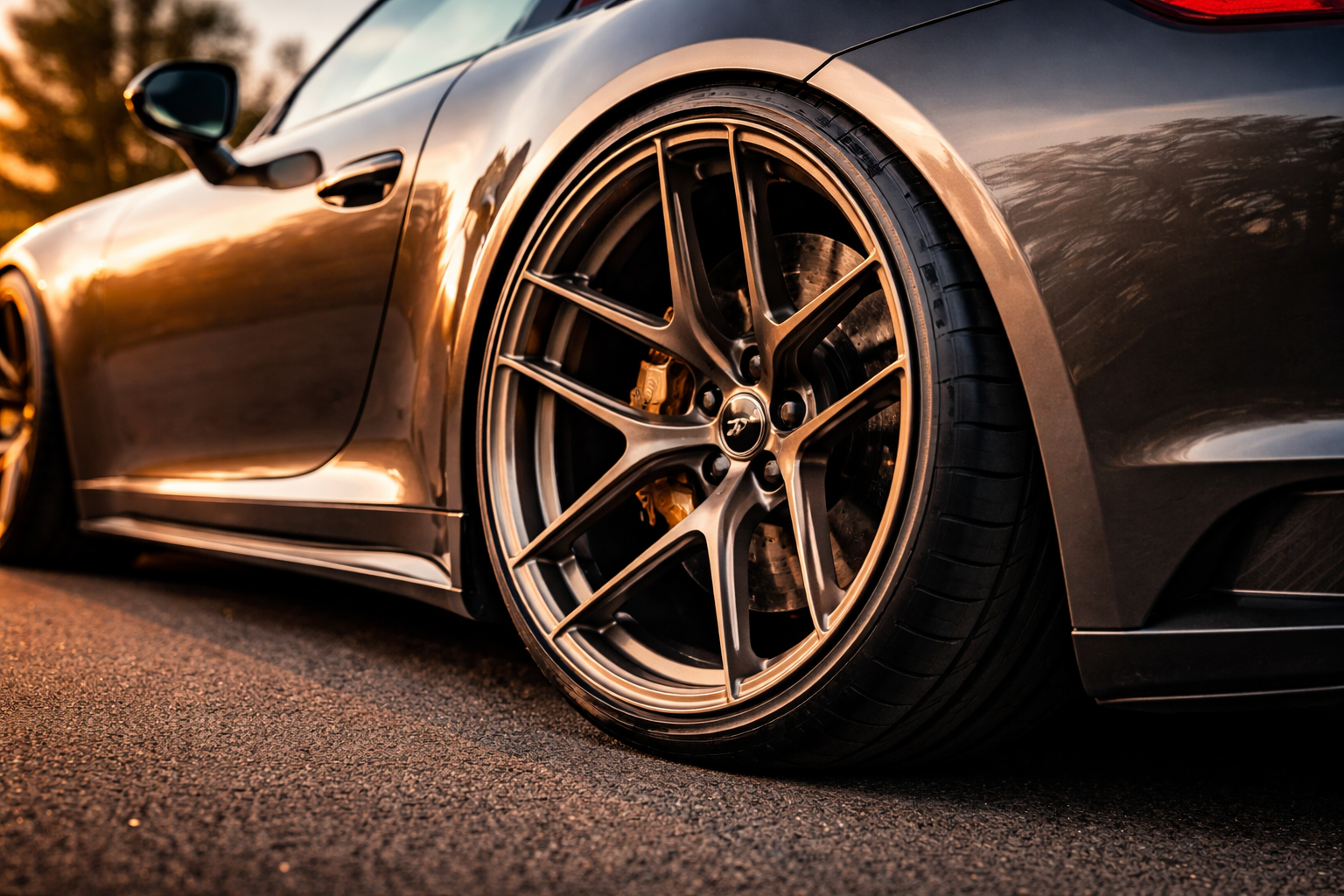
In the world of high-end automotive customization, achieving the “perfect stance” is the ultimate goal. Whether the objective is a highly functional track setup, a luxurious flush fitment on an executive sedan, or an aggressive, wide-body aesthetic, the secret lies entirely in the mathematics of wheel fitment.
For B2B distributors, high-end tuning shops, and discerning automotive enthusiasts, relying on off-the-shelf cast wheels often leads to frustrating compromises. Spacers, hub-centric rings, and fender rubbing become unwanted headaches.
The definitive solution is bespoke manufacturing. By understanding the critical parameters of wheel fitment—Offset (ET), Pitch Circle Diameter (PCD), and Center Bore (CB)—and leveraging the precision of custom forged wheels, you can achieve millimeter-perfect fitment every time. In this comprehensive guide, Shanghai ChenCheChi Technology Co., Ltd. (CNWR) breaks down the science of wheel fitment and explains why bespoke forged manufacturing is the industry gold standard.
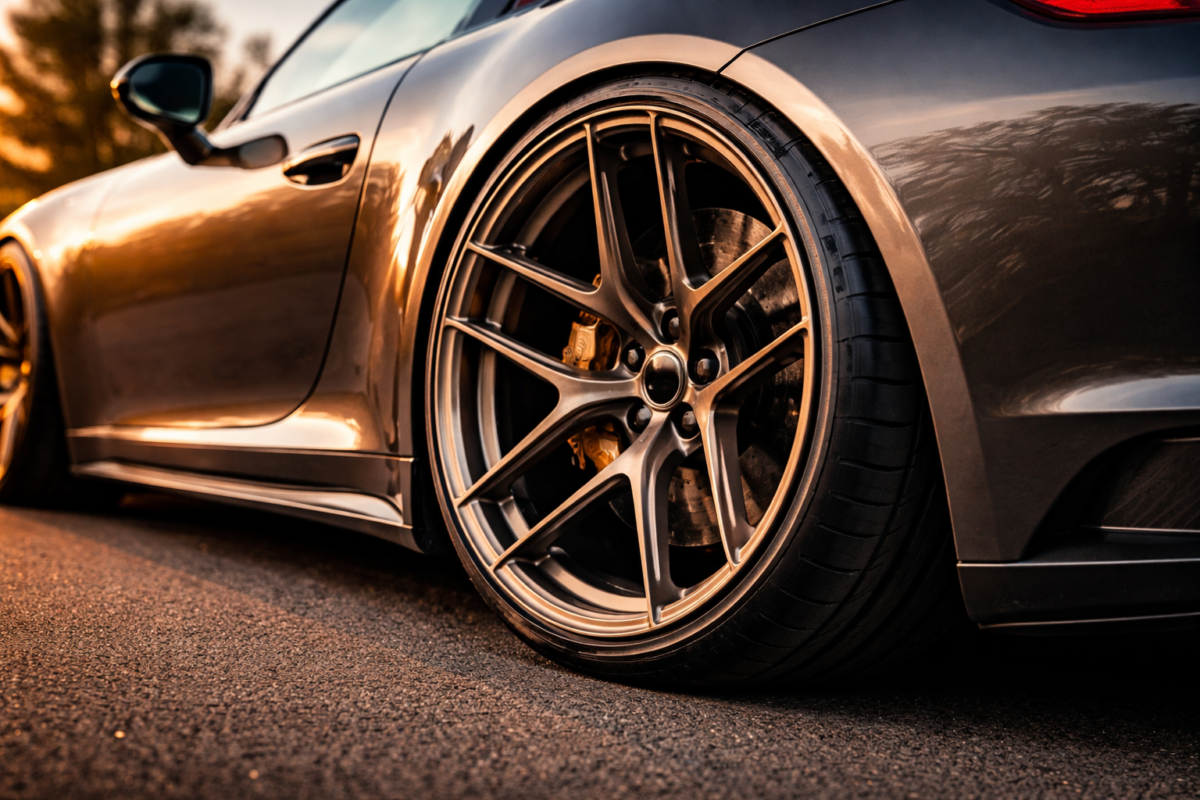
A high-performance luxury sports car showcasing a perfect, millimeter-flush stance with custom offset CNWR forged wheels.
The Anatomy of Wheel Fitment: Key Parameters Explained
Before specifying a wheel for manufacturing, one must understand the exact mounting geometry of the target vehicle. A wheel is not a universal component; it is a highly specific structural piece that interfaces intimately with the vehicle’s suspension, braking, and drivetrain systems.
Pitch Circle Diameter (PCD) / Bolt Pattern
The PCD, commonly referred to as the bolt pattern, is the diameter of the imaginary circle drawn through the center of the wheel lugs. It is typically expressed with two numbers: the number of lug holes and the diameter of the circle in millimeters.
-
Example: A
5x114.3PCD means there are 5 lug holes evenly spaced on a circle with a diameter of 114.3mm. -
Engineering Reality: If the PCD of the wheel is even a fraction of a millimeter off from the vehicle’s hub, the wheel cannot be safely mounted. While some cast wheel manufacturers use “wobble bolts” or universal multi-drill patterns to fit multiple cars, this compromises structural integrity. CNWR forged wheels are precision CNC-machined to exact PCD specifications for uncompromised safety.
Center Bore (CB) and Hub-Centricity
The center bore is the machined hole in the exact center of the wheel that seats over the vehicle’s mounting hub.
-
Lug-Centric vs. Hub-Centric: Many mass-produced cast wheels are manufactured with a massive center bore (e.g., 74.1mm) so they can fit various vehicles using plastic or aluminum “hub-centric rings.” This is known as a lug-centric approach, where the lug nuts bear the weight of centering the wheel, which often leads to high-speed steering wheel vibrations.
-
The Forged Standard: True custom forged wheels are machined to be hub-centric. If your vehicle has a 66.6mm hub, a CNWR forged wheel is milled to exactly 66.6mm. The hub bears the load of the vehicle, ensuring a perfectly smooth, vibration-free ride at any speed.
Demystifying Wheel Offset (ET) and Backspacing
Of all the fitment parameters, Offset (frequently denoted as ET, from the German word Einpresstiefe, meaning “insertion depth”) is the most critical for achieving the perfect stance.
What is Offset (ET)?
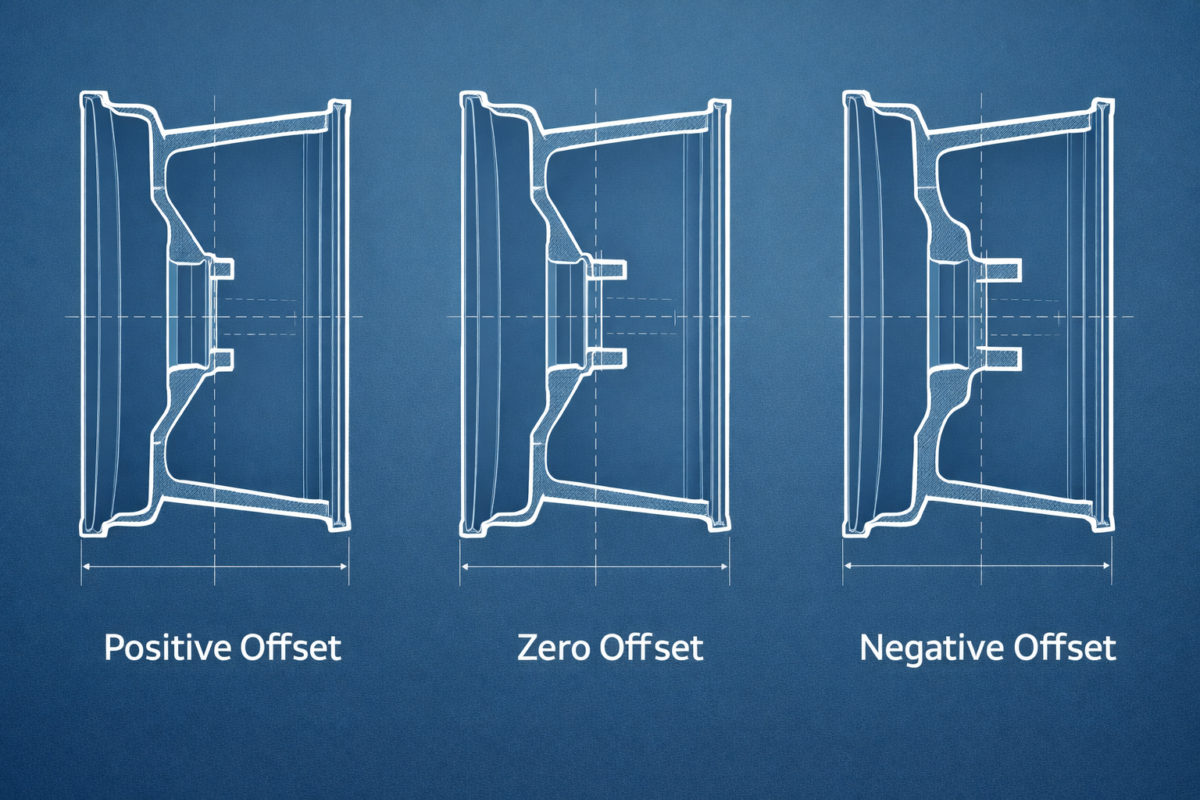
Offset is the distance, measured in millimeters, from the absolute centerline of the wheel to the mounting hub face (the backpad of the wheel that touches the vehicle).
| Type of Offset | Definition | Visual Result / Stance | Common Applications |
| Zero Offset (ET 0) | The mounting face is exactly in the center of the wheel’s width. | The wheel sits further out toward the fender. | Lifted off-road trucks, classic muscle cars, extreme wide-body builds. |
| Positive Offset (ET +) | The mounting face is pushed toward the outside (street side) of the wheel. | The wheel is tucked inward toward the suspension struts. | Most modern OEM vehicles, front-wheel drive cars, and modern high-performance EVs. |
| Negative Offset (ET -) | The mounting face is pulled inward toward the brake side of the wheel. | Creates a massive “deep lip” or extreme poke outside the fender. | Highly modified show cars, lifted trucks with wide fender flares. |
How Offset Dictates the “X-Factor” and Brake Clearance
Modern high-performance vehicles, especially heavy, high-torque electric vehicles like the Porsche Taycan or the Xiaomi SU7, feature massive multi-piston brake calipers and complex aerodynamic requirements. These vehicles typically require high positive offsets (e.g., +45mm to +55mm) to keep the wheel inside the fender for aerodynamic efficiency.
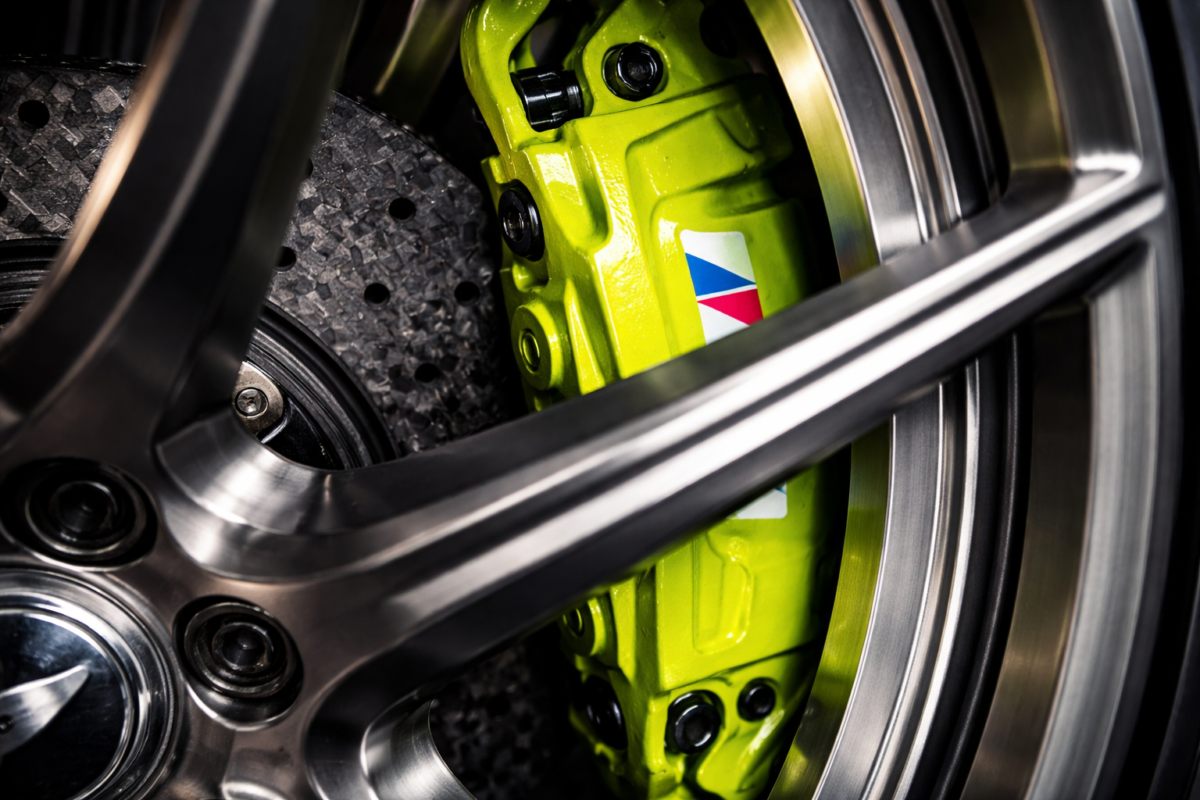
However, a high positive offset brings the wheel spokes dangerously close to those massive brake calipers. This introduces the X-Factor—the clearance between the back of the wheel spokes and the face of the brake caliper.
The Forged Advantage in Custom Fitment
Why can’t you just buy a cast wheel with the perfect offset? The answer lies in the manufacturing process.
The Limitations of Cast Wheels
Cast wheels are created by pouring molten metal into a fixed, expensive mold. To maintain profitability, manufacturers produce these molds in safe, conservative, “one-size-fits-most” offsets. If a B2B distributor wants a specific, aggressive flush fitment for a client’s BMW M4, they are often forced to sell the client a conservative cast wheel and rely on wheel spacers to push the wheel outward. Spacers add unsprung weight, create additional failure points, and can negatively alter the vehicle’s scrub radius and suspension geometry.
The Precision of Bespoke Forging
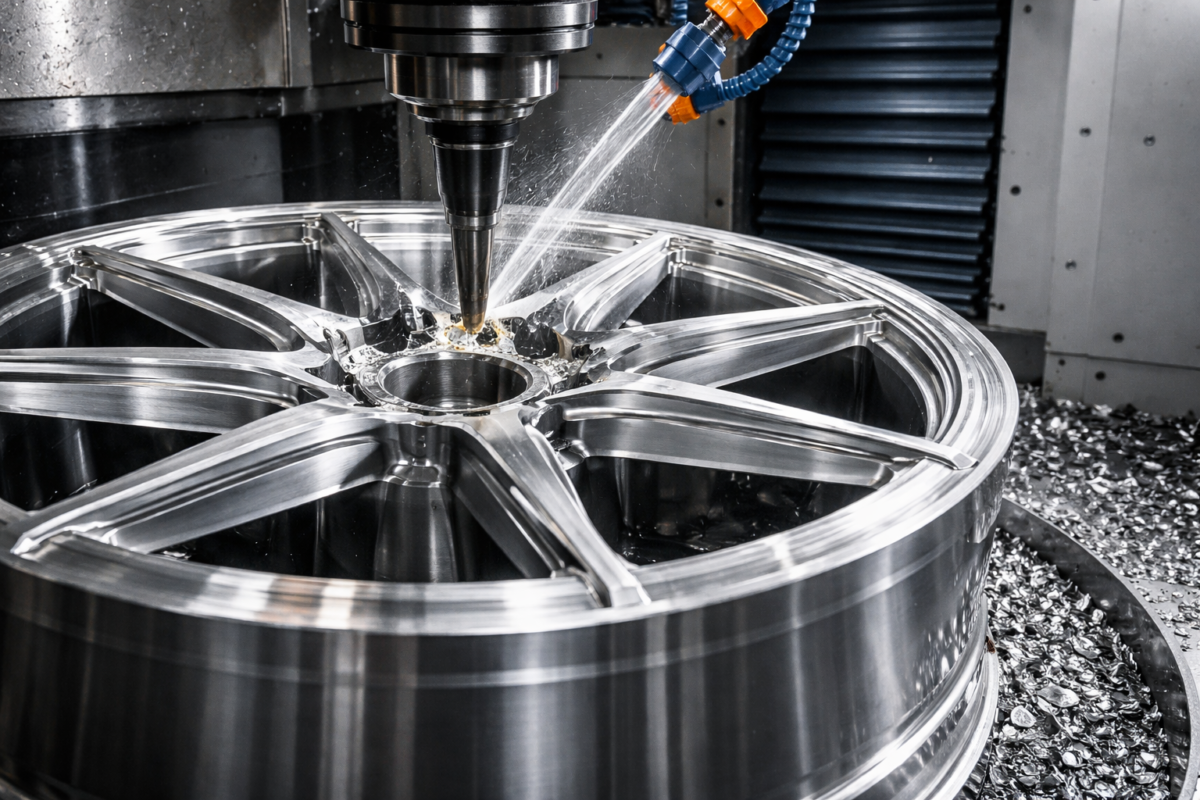
Because CNWR forged wheels begin as a solid billet of aerospace-grade 6061-T6 aluminum, there are no fixed molds. Every single parameter is dictated by code in a 5-axis CNC machine.
This means we can engineer a custom offset down to the exact millimeter (e.g., ET +32 instead of a generic ET +35). By adjusting the thickness of the mounting backpad and the curvature of the spoke profiles during the Finite Element Analysis (FEA) stage, CNWR ensures:
-
Millimeter-Perfect Fender Flushness: No spacers required.
-
Massive Brake Clearance: Custom spoke profiling to clear the largest aftermarket Big Brake Kits (BBK).
-
Maximum Concavity: We engineer the deepest possible concave profile that the vehicle’s specific offset and brake clearance will physically allow.
Sourcing Custom Fitments for Your Clients
For wholesale distributors, premium tuning shops, and bespoke builders, the ability to offer guaranteed, custom fitments is a massive competitive advantage.
Stocking hundreds of different cast wheels in various sizes, bolt patterns, and offsets is a logistical nightmare that ties up vital capital. Furthermore, when a client arrives with a rare supercar, a heavily modified wide-body project, or a brand-new EV platform, off-the-shelf options simply will not fit.
Partnering with Shanghai ChenCheChi Technology Co., Ltd.
As a premier OEM/ODM forged wheel manufacturer, CNWR functions as your in-house engineering team.
-
No Inventory Risk: You do not need to stock every fitment. You simply take the client’s vehicle specifications and desired stance, and our engineers will calculate the perfect width, ET, and PCD.
-
White-Label / ODM Manufacturing: We can manufacture bespoke, precisely fitted forged wheels featuring your brand’s center caps and logo engravings, elevating your brand equity.
-
Guaranteed Fitment: By utilizing precise 3D scanning data and FEA software, we guarantee the fitment. Whether your client wants a functional track setup or a “fender-to-lip” show car stance, we deliver the exact geometry required straight from the factory.
Frequently Asked Questions (FAQs)
Q1: What happens if I install a wheel with the wrong offset?
A: If the offset is too high (positive), the wheel will sit too far inward, potentially rubbing against the suspension strut or brake calipers. If the offset is too low (negative), the wheel will poke out past the fender, causing the tire to rub against the fender arch over bumps and drastically altering your steering geometry (scrub radius).
Q2: Are wheel spacers safe, or should I always buy custom offset wheels?
A: While high-quality, hub-centric spacers can be used safely for minor adjustments, they are always a compromise. They add unsprung weight and introduce extra stress on the wheel bearings. A custom-forged wheel machined to the exact desired ET is always the superior, safer, and higher-performing engineering solution.
Q3: Does the width of the wheel change how the offset affects the stance?
A: Yes, absolutely. Offset is calculated from the centerline of the wheel. If you increase a wheel’s width by 1 inch (25.4mm) but keep the exact same offset, the wheel will extend 12.7mm closer to the suspension and 12.7mm further out toward the fender.
Q4: Can CNWR help me calculate the perfect custom fitment for my B2B clients?
A: Yes. Our engineering team at Shanghai ChenCheChi Technology Co., Ltd. assists our wholesale and tuning partners daily. By providing us with the vehicle model, brake specifications, and desired stance, we calculate the exact width and ET required to manufacture the perfect forged wheel.
Conclusion
Achieving the perfect stance is a precise science. It requires moving beyond the limitations of mass-produced, one-size-fits-all cast wheels and embracing the geometric exactness of custom manufacturing. Understanding PCD, Center Bore, and most importantly, the nuances of Offset (ET), is the foundation of elite automotive customization.
For those who demand uncompromising aesthetics, maximum brake clearance, and perfect fender alignment without the use of spacers, bespoke forged wheels are the only solution.
For B2B distributors and premium tuning facilities, offering custom-tailored fitments elevates your business above the competition. Shanghai ChenCheChi Technology Co., Ltd. (CNWR) is your dedicated manufacturing partner, equipped with the engineering expertise and 5-axis CNC technology to turn complex fitment mathematics into rolling works of art.
Stop compromising on fitment. [Contact the CNWR B2B Wholesale Team Today] to discuss how our custom forged wheel manufacturing can provide your clients with the perfect stance, every single time.