

Introduction
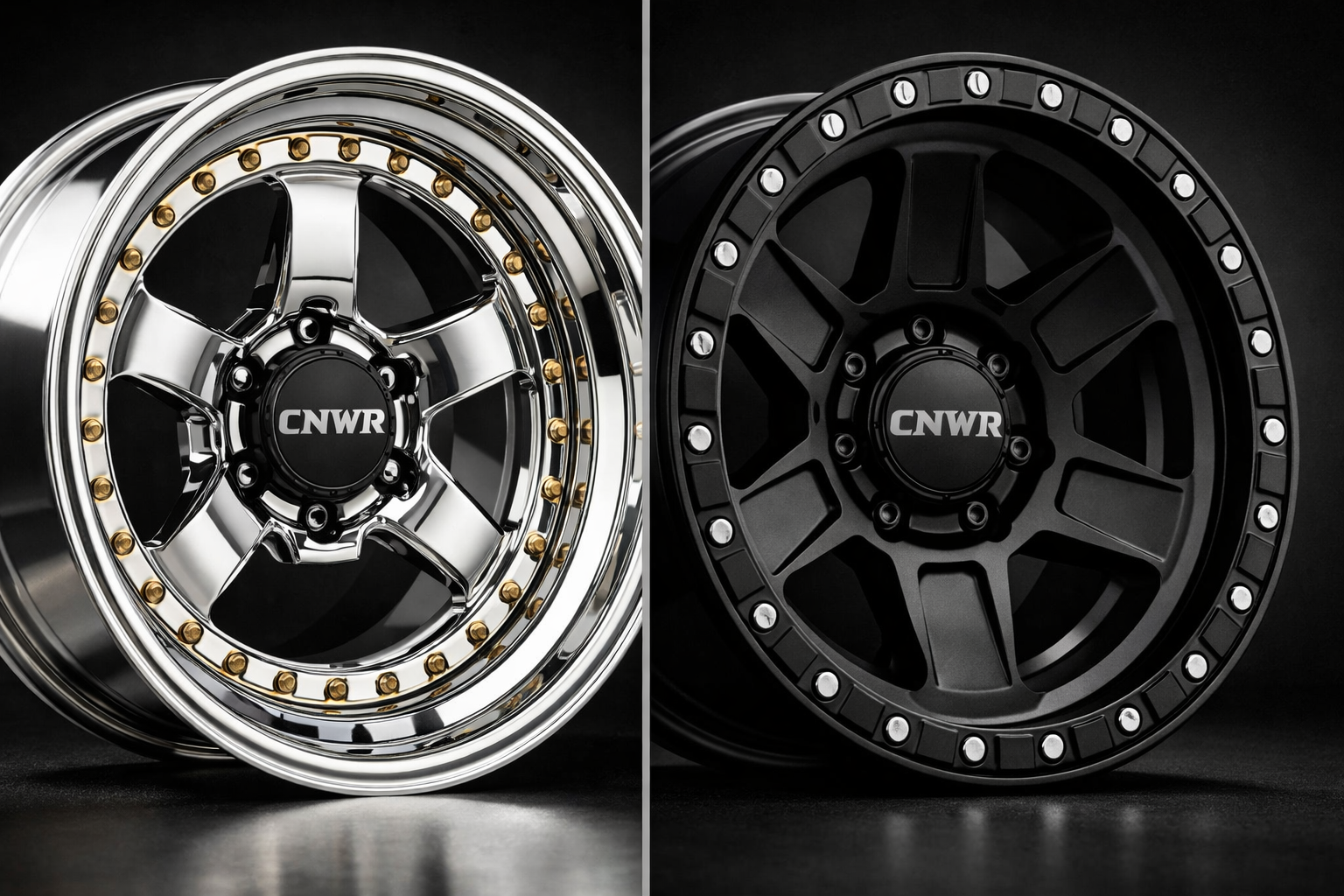
In the upper echelon of automotive modification, a vehicle’s wheels are its defining signature. They dictate the stance, influence the aerodynamic profile, and instantly communicate the builder’s intent—whether that is blistering track performance, VIP luxury, or aggressive overlanding. As we move deeper into 2026, the custom forged wheel market is experiencing a fascinating aesthetic divergence, primarily centered around one core debate: Deep Dish vs. Concave designs.
Historically, these two distinct geometrical styles catered to completely different automotive subcultures. Today, driven by advancements in 5-axis CNC machining and the limitless structural potential of aerospace-grade 6061-T6 aluminum, these designs are evolving, intersecting, and dominating the aftermarket.
For automotive enthusiasts seeking the perfect fitment, or B2B distributors planning their high-margin inventory for the upcoming year, understanding the engineering, visual impact, and market trajectory of these profiles is essential.
Manufactured by Shanghai ChenCheChi Technology Co., Ltd. and operating globally under the premium brand CNWR (CN Wheel Rims), we have been at the forefront of forging these trends. In this comprehensive 2026 guide, we will dissect the engineering behind deep dish and concave wheels, compare their performance implications, and provide critical insights for the B2B automotive sector.
Understanding the Geometry: Offset and Backspacing
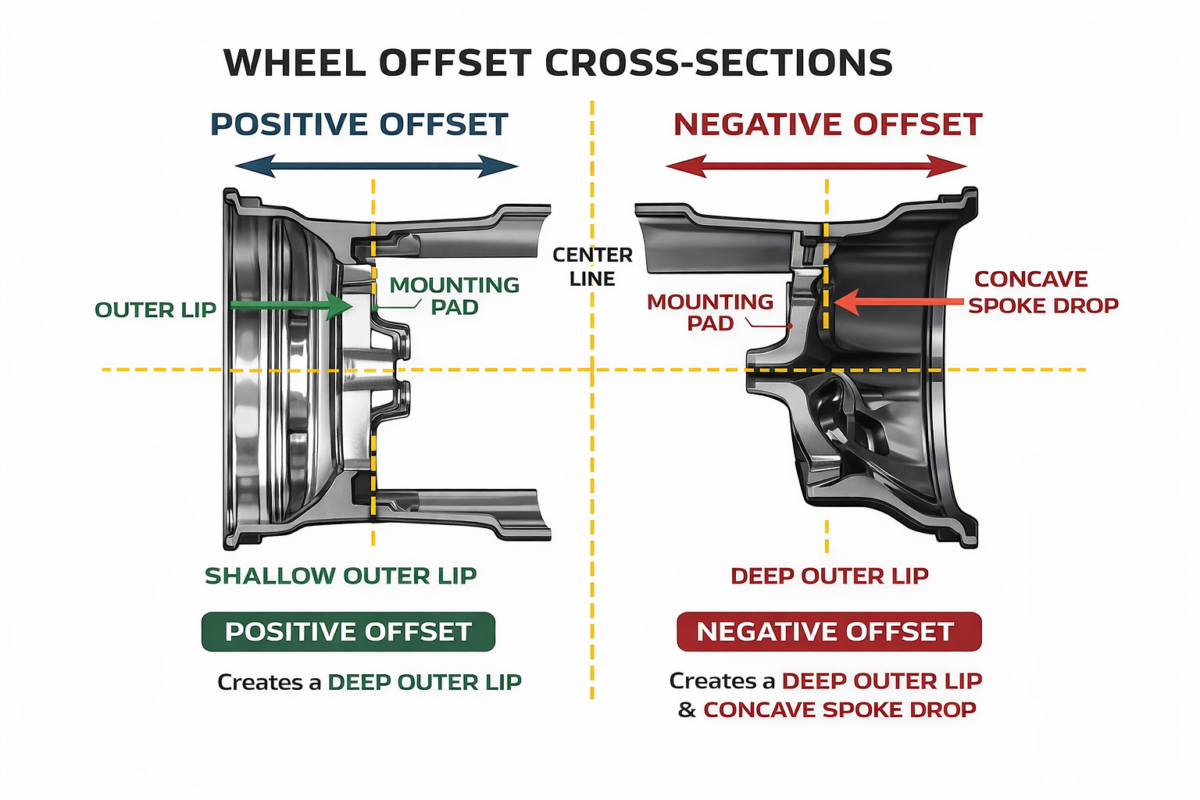
Before diving into aesthetic trends, one must understand the mathematical foundation that makes a wheel “deep dish” or “concave.” It all comes down to where the center mounting pad (the part of the wheel that bolts to the vehicle’s hub) is positioned relative to the wheel’s overall width.
The Physics of the Deep Dish
A deep dish wheel is characterized by a massive outer lip. Visually, the center face of the wheel is pushed far back into the barrel.
-
The Geometry: Deep dish designs rely on a negative offset or a very low positive offset. This means the mounting pad is located closer to the inner, suspension-facing side of the wheel.
-
The Construction: While monoblock deep dish wheels exist, this extreme geometry is most effectively achieved using 2-piece or 3-piece custom forged wheels. By utilizing a separate outer lip, manufacturers can bolt the wheel face behind massive, spun-forged step-lips ranging from 3 to 8 inches in depth.
The Physics of the Concave Profile
A concave wheel creates depth not with a flat outer lip, but by plunging the spokes inward from the outer rim edge down toward a deeply recessed center hub.
-
The Geometry: Concave wheels typically utilize a lower positive offset combined with a wide wheel barrel. The mounting pad sits relatively central, but the spokes dramatically sweep backward from the outer edge to meet it.
-
The Construction: This design is the crown jewel of the monoblock forged wheel. It requires taking a massive, thick billet of 6061-T6 aluminum and using a 5-axis CNC machine to hollow out the center, creating an aggressive, bowl-like profile.
The Deep Dish Revival: Classic Swagger Meets Modern Forging
Deep dish wheels are not a new concept; they have roots in classic muscle cars, the 1990s JDM tuning scene, and ultra-luxury VIP sedans. However, the 2026 trend is a massive revival of this aesthetic, propelled by modern widebody kits.
Aesthetic Appeal: Stance and Presence
Nothing screams “custom” quite like a massive, highly polished outer lip reflecting the paintwork of the car. Deep dish wheels provide unparalleled visual width. When paired with modern widebody conversions (like Liberty Walk or Pandem kits), they fill out the massive fender arches, creating an impossibly low and wide stance that commands attention at any car show.
The Engineering Challenges
Creating a profound deep dish comes with distinct engineering hurdles that separate premium manufacturers from budget brands:
-
Brake Clearance: Because the wheel face is pushed backward to maximize the outer lip, it frequently interferes with the vehicle’s brake calipers. CNWR engineers use rigorous CAD modeling and Finite Element Analysis (FEA) to sculpt the backside of the spokes, ensuring they clear Big Brake Kits (BBK) without sacrificing the lip depth.
-
Structural Integrity: Pushing the mounting pad far away from the centerline of the wheel creates immense leverage and stress on the hub. Utilizing pure 6061-T6 aluminum and precise T6 heat treatment is mandatory to prevent the wheel face from fracturing under high-torque acceleration or heavy cornering loads.
The Concave Revolution: Aggressive Performance in 2026
While deep dish appeals to the stance and luxury crowds, the concave profile has utterly dominated the supercar, sports sedan, and high-performance EV markets in 2026.
Aesthetic Appeal: The Infinity Effect
Concave wheels offer a sense of motion even when standing still. The aggressive inward sweep of the spokes draws the eye directly to the center cap, creating a menacing, highly technical appearance. Because the spokes extend all the way to the absolute outer edge of the barrel, a concave wheel visually appears larger in diameter than a deep dish wheel of the exact same size.
Engineering Benefits for High Performance
The concave design is not just about looks; it is born from motorsport efficiency.
-
Maximum Big Brake Clearance: By pushing the outer edges of the spokes to the front of the wheel barrel and curving them inward, concave wheels create a massive cavern of space immediately behind the spokes. This is the ultimate design for clearing massive 6-piston and 8-piston carbon-ceramic brake systems found on modern supercars.
-
Unsprung Mass Optimization: Monoblock concave wheels are incredibly light. By utilizing advanced FEA, CNWR CNC machines can shave the spokes incredibly thin while maintaining a structurally rigid “arch” shape that handles cornering G-forces effortlessly.
Head-to-Head: Deep Dish vs. Concave Custom Forged Wheels
To assist B2B distributors and consumers in selecting the right profile for their specific application, here is a direct comparison of the two aesthetics:
| Feature | Deep Dish (Often Multi-Piece) | Concave (Often Monoblock) |
| Visual Focus | Massive outer lip, reflective depth | Aggressive spoke sweep, technical center |
| Primary Vehicle Types | Widebody builds, VIP sedans, Classic Restomods | Supercars, Sports Sedans, Performance EVs |
| Perceived Size | Looks slightly smaller due to step-lips | Looks larger as spokes reach the tire edge |
| Weight | Heavier (due to assembly hardware) | Lighter (optimized unsprung mass) |
| Brake Clearance | Challenging (Requires precise custom CAD) | Excellent (Inherent to the sweeping design) |
| Cost | Premium (High labor and multi-piece parts) | High (Requires massive starting aluminum billets) |

2026 Aesthetic Trends: What the Market is Demanding
As an OEM wheel supplier monitoring global automotive tastes, Shanghai ChenCheChi Technology Co., Ltd. has identified several hybrid trends defining the 2026 market.
1. The “Deep Concave” Hybrid
Why choose one when you can engineer both? In 2026, the most sought-after ultra-premium design is the multi-piece deep concave wheel. This involves CNC machining a highly concave center face and bolting it into a wide, stepped-lip barrel. It requires immense negative offsets and ultra-wide fenders, but it delivers the aggressive spoke drop of a track wheel with the reflective outer lip of a show wheel.
2. Aero-Concave for the EV Market
With the massive surge in high-performance Electric Vehicles (EVs), aerodynamics dictate range. We are seeing a massive trend toward “aero-concave” monoblock wheels. These feature thick, blade-like spokes that sweep inward to the hub, acting as turbines to extract hot air from the brakes while minimizing aerodynamic drag on the vehicle’s profile.
3. Brushed Translucent Finishes
In terms of finishing, heavy metallic paints are being replaced by raw, technical aesthetics. Consumers want to see the quality of the CNC machining. Hand-brushed aluminum faces coated with tinted, translucent clear coats (like brushed candy apple red or double-tinted black) are the defining finish of 2026, highlighting the sharp chamfers of concave spokes and the deep reflections of step-lips.
Stocking and Specifying for 2026
For B2B wholesale buyers, aftermarket tuning shops, and emerging wheel brands, adapting to these aesthetic shifts is critical for inventory velocity and brand prestige.
The Challenge of Stocking Deep Dish
Because deep dish wheels require highly specific, negative offsets to sit perfectly flush with custom widebody fenders, they are notoriously difficult to stock as “off-the-shelf” inventory. A millimeter miscalculation can result in the wheel rubbing against the suspension or protruding past the fender.
-
The B2B Solution: Deep dish inventory should be treated as a bespoke, Made-to-Order (MTO) program. Distributors should partner with an agile manufacturer like CNWR, leveraging our rapid CNC prototyping to deliver exact-fitment multi-piece wheels tailored to specific client builds.
The High-Volume Potential of Concave Monoblocks
Concave monoblocks are highly scalable for B2B distributors. Because their fitments are more universally compatible with factory fenders and big brake kits, distributors can safely stock popular sizes (e.g., 20×9 front, 20×10.5 rear) for high-volume platforms like the BMW M-Series, Audi RS lines, and Tesla Model 3/S.
Leverage OEM/ODM Expertise with Shanghai ChenCheChi Technology Co., Ltd.
Operating a successful wheel brand in 2026 requires an impeccable supply chain. At Shanghai ChenCheChi Technology Co., Ltd., our CNWR division offers comprehensive Original Equipment Manufacturer (OEM) and Original Design Manufacturer (ODM) services.
Whether you want to launch an exclusive line of aero-concave EV wheels or a heritage-inspired catalog of 3-piece deep dish designs, our engineering team handles the FEA stress testing, 10,000-ton forging, 5-axis CNC machining, and global logistics. We turn your aesthetic vision into certified, market-ready forged reality.
Frequently Asked Questions (FAQs)
Can I put a deep dish wheel on a car with Big Brake Kits (BBK)?
Yes, but it requires highly precise custom CNC machining. The wheel’s center mounting pad must be engineered with a thicker back-pad profile to push the spokes away from the calipers, which slightly reduces the maximum potential depth of the outer lip. Partnering with a custom forged wheel manufacturer like CNWR ensures brake clearance without compromising the design.
Do concave wheels stick out past the fender?
Not if they are engineered correctly. A properly designed custom forged concave wheel utilizes the correct positive offset for the specific vehicle chassis. The deep “bowl” effect happens entirely within the wheel well and the physical width of the barrel, keeping the tire perfectly flush with the factory fender line.
Which is stronger, a deep dish or a concave wheel?
Assuming both are made from forged 6061-T6 aluminum, a monoblock concave wheel generally possesses higher structural rigidity and a better strength-to-weight ratio. The single-piece construction and the arching geometry of the concave spokes distribute load forces incredibly efficiently. Multi-piece deep dish wheels are exceptionally strong, but the assembly hardware and overlapping flanges add weight and slight flex under extreme track conditions.
Can I get a concave design in a 3-piece wheel?
Absolutely. This is known as a hybrid “deep concave” multi-piece wheel. It features a CNC-machined concave face bolted to a separate inner and outer barrel, combining the aggressive spoke drop with a customizable outer lip.
Conclusion
The debate between Deep Dish vs. Concave designs is no longer a matter of which is “better”—it is a matter of automotive identity. Deep dish wheels offer an undeniable, reflective swagger that pays homage to tuning heritage and stance culture. Concave wheels deliver a hyper-modern, technical aggression optimized for unsprung weight reduction and massive brake clearance.
In 2026, the custom forged wheel market demands both, and it demands them executed flawlessly. The complex geometries, critical brake clearances, and extreme structural loads require the expertise of a world-class manufacturer.
At Shanghai ChenCheChi Technology Co., Ltd., our premium CNWR brand is equipped with the 10,000-ton presses, 5-axis CNC technology, and aerospace-grade aluminum necessary to master any aesthetic trend.