

Introduction
In the upper echelons of automotive tuning, motorsport, and luxury styling, forged wheels are the undisputed benchmark. Unlike cast wheels, which are formed by pouring molten aluminum into a mold, forged wheels begin their life as a solid block of aerospace-grade 6061-T6 aluminum. Subjected to extreme heat and millions of pounds of pressure, this process creates an incredibly dense, aligned grain structure that offers unparalleled strength and immense weight reduction.
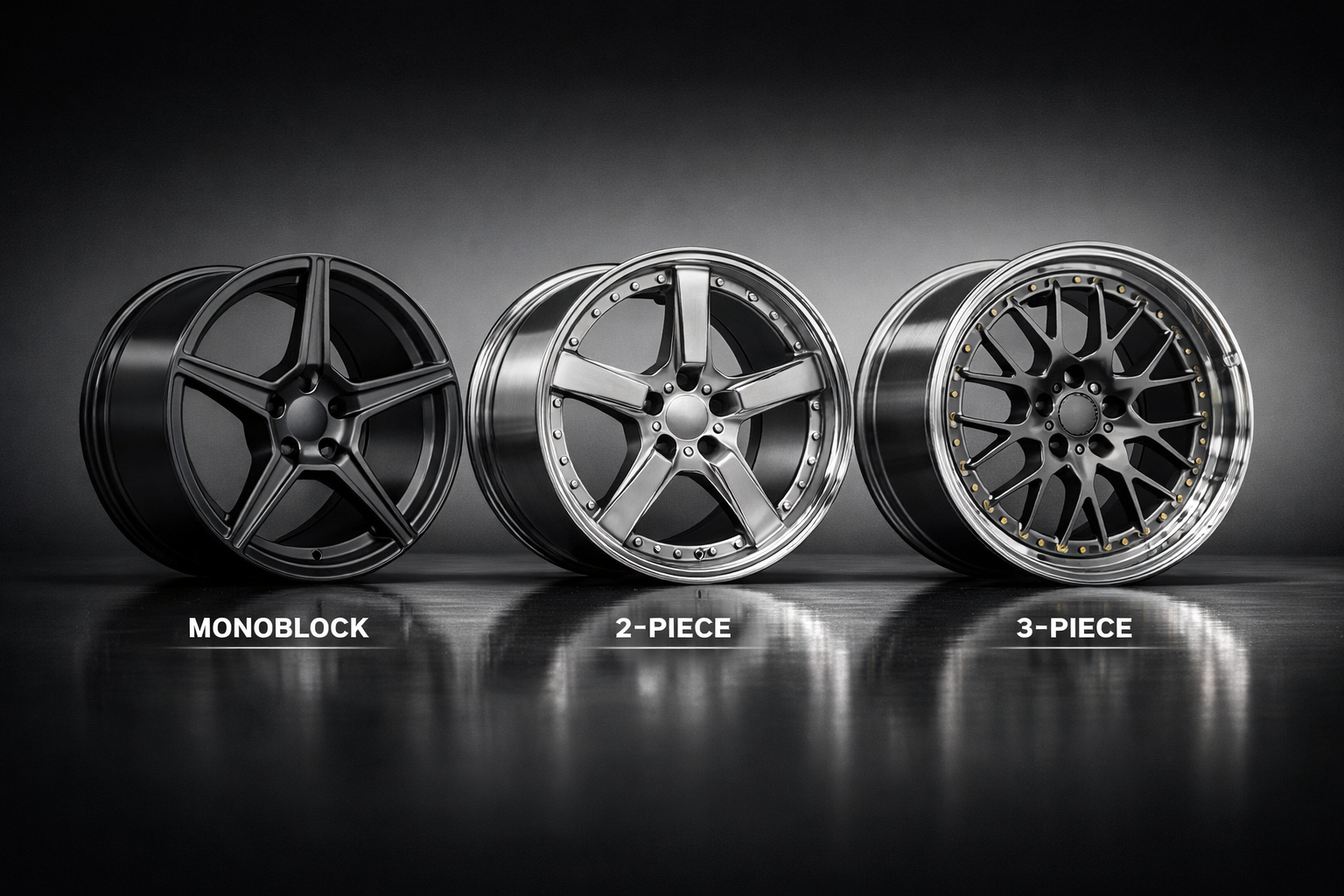
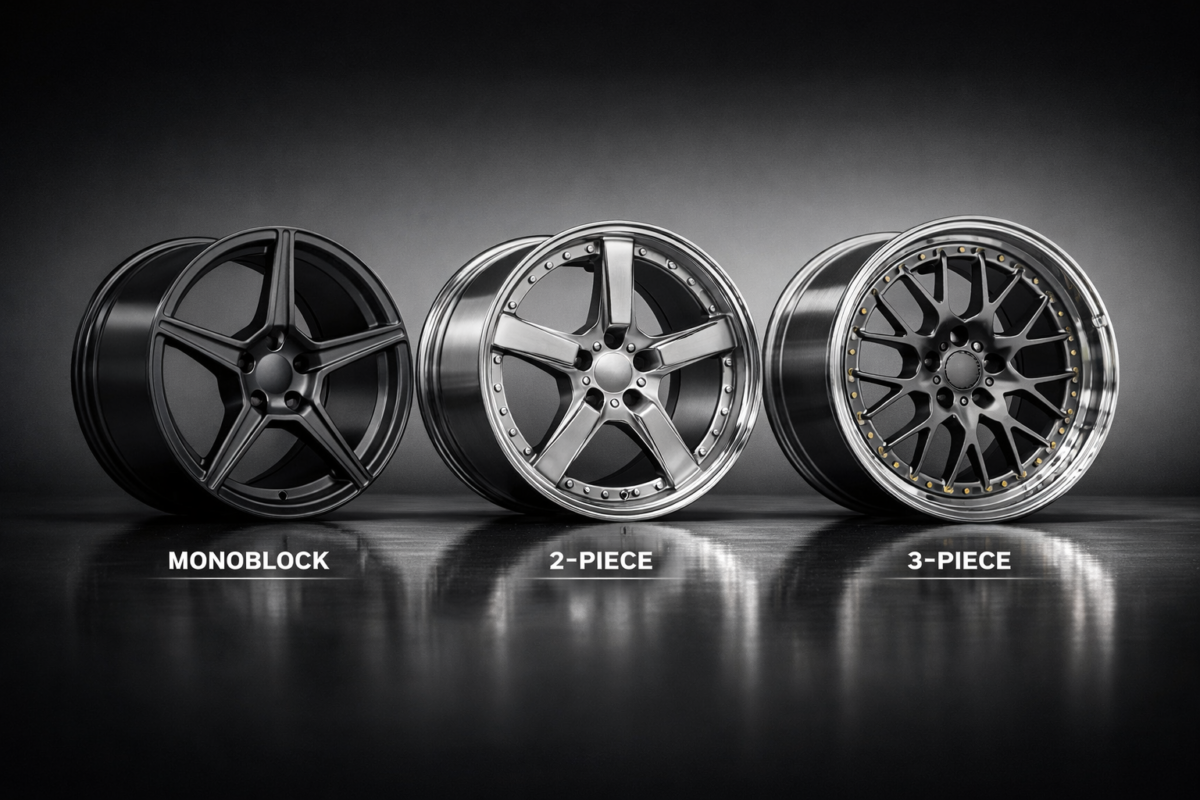
However, deciding to upgrade to forged wheels is only the first step. The next, and arguably most crucial, decision involves choosing the structural configuration of the wheel. The industry categorizes these engineering marvels into three distinct types: Monoblock (1-piece), 2-Piece, and 3-Piece forged wheels.
Whether you are a performance enthusiast seeking to shave crucial seconds off lap times, a luxury car owner looking for the perfect stance, or a B2B distributor aiming to provide premium OEM/ODM products to your clientele, understanding these configurations is essential.
As a leading forged wheel manufacturer, CN Wheel Rims (CNWR) has engineered and produced thousands of wheels across all three categories. In this comprehensive guide, we will break down the manufacturing processes, the structural pros and cons, and the ideal use cases for monoblock, 2-piece, and 3-piece custom forged wheels so you can make an informed, data-driven decision.
The Core of Forged Wheels: Why Construction Matters
Before diving into the differences, it is vital to understand what unites all true forged wheels: the material and the initial process. All premium forged wheels start as a solid aluminum billet. When this billet is pressed, it creates a material with exceptionally high yield strength. This allows multi-axis CNC machines to mill away significant amounts of metal—creating intricate, ultra-thin spoke designs—without compromising the structural integrity or load rating of the wheel.
The difference between a 1-piece, 2-piece, and 3-piece wheel comes down to how the final barrel and the face (the center design) of the wheel are constructed and joined together. This structural variance directly impacts the wheel’s weight, its repairability, and its capacity for extreme custom offsets and widths.
Monoblock (1-Piece) Forged Wheels: The Uncompromising Performer
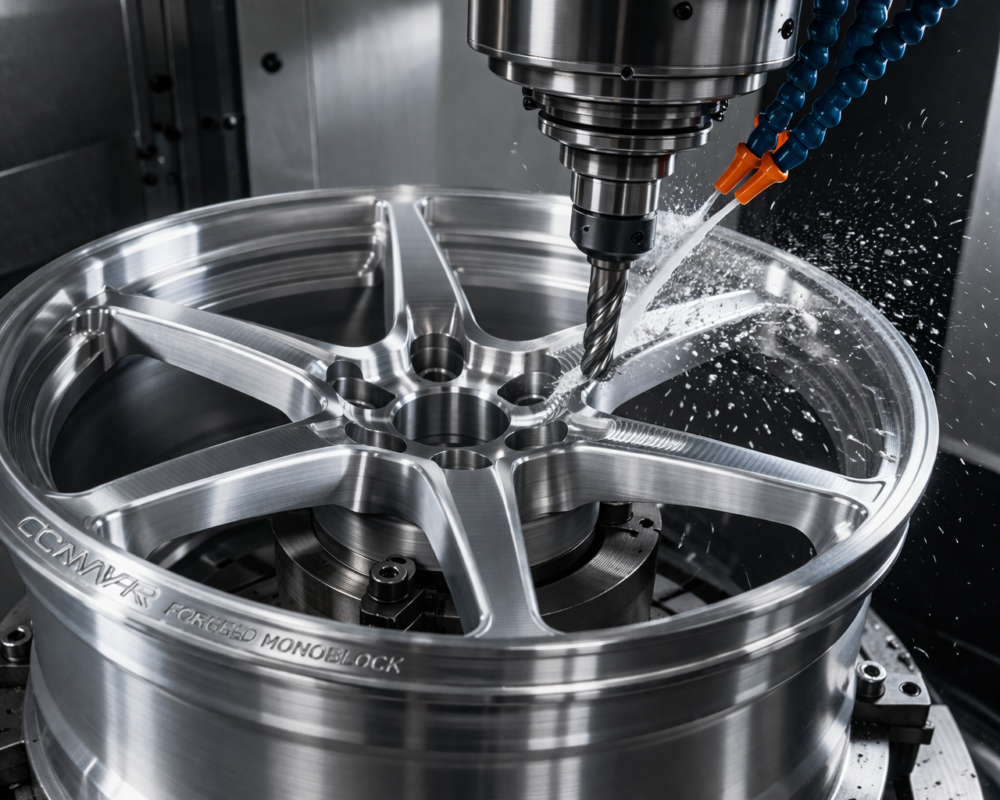
As the name suggests, a monoblock forged wheel is milled from a single, unified block of forged aluminum. The face, the barrel, and the mounting hub are all one continuous piece of metal.
How They Are Made
The manufacturing process for a monoblock wheel is an exercise in extreme subtraction. A forged blank is placed into a precision CNC lathe, which carves out the inner and outer barrel profiles. It is then transferred to a multi-axis CNC mill, which meticulously cuts out the spokes, weight-reduction pockets, and the exact Pitch Circle Diameter (PCD) bolt pattern. Because there are no connecting hardware bolts, flanges, or silicone seals, the structural continuity is perfect.
The Advantages
-
Absolute Minimum Weight: Monoblock wheels are the lightest of the forged wheel family. By eliminating assembly hardware (like titanium bolts and nuts) and overlapping mounting flanges, unsprung mass is kept to an absolute minimum.
-
Maximum Structural Rigidity: With a continuous grain structure from the hub to the outer lip, monoblocks exhibit the highest stiffness. This translates to razor-sharp steering response and zero deflection under heavy cornering loads.
-
Superior True/Runout: Because they are machined from a single setup, monoblocks boast incredibly low runout (the measure of how perfectly round the wheel is), leading to a glassy-smooth ride at high speeds.
The Disadvantages
-
Limited Extreme Customization: While you can customize the offset (ET) and diameter, monoblocks are restricted by the dimensions of the original aluminum forging blank. You cannot achieve the massive, deep-dish lips found on modular wheels.
-
Cost of Replacement: If a monoblock wheel sustains severe damage—such as a catastrophic impact that bends the inner barrel beyond repair—the entire wheel must be replaced.
Best Applications
Monoblock wheels are the holy grail for track cars, supercars, and high-performance daily drivers. Furthermore, with the rapid evolution of the automotive market—particularly the surge in high-performance electric vehicles (EVs) that generate instant torque and carry heavy battery packs—the structural rigidity and weight-saving characteristics of monoblock forged wheels have never been more critical to maximize range and safely support the chassis load.
2-Piece Forged Wheels: The Sweet Spot of Customization and Value
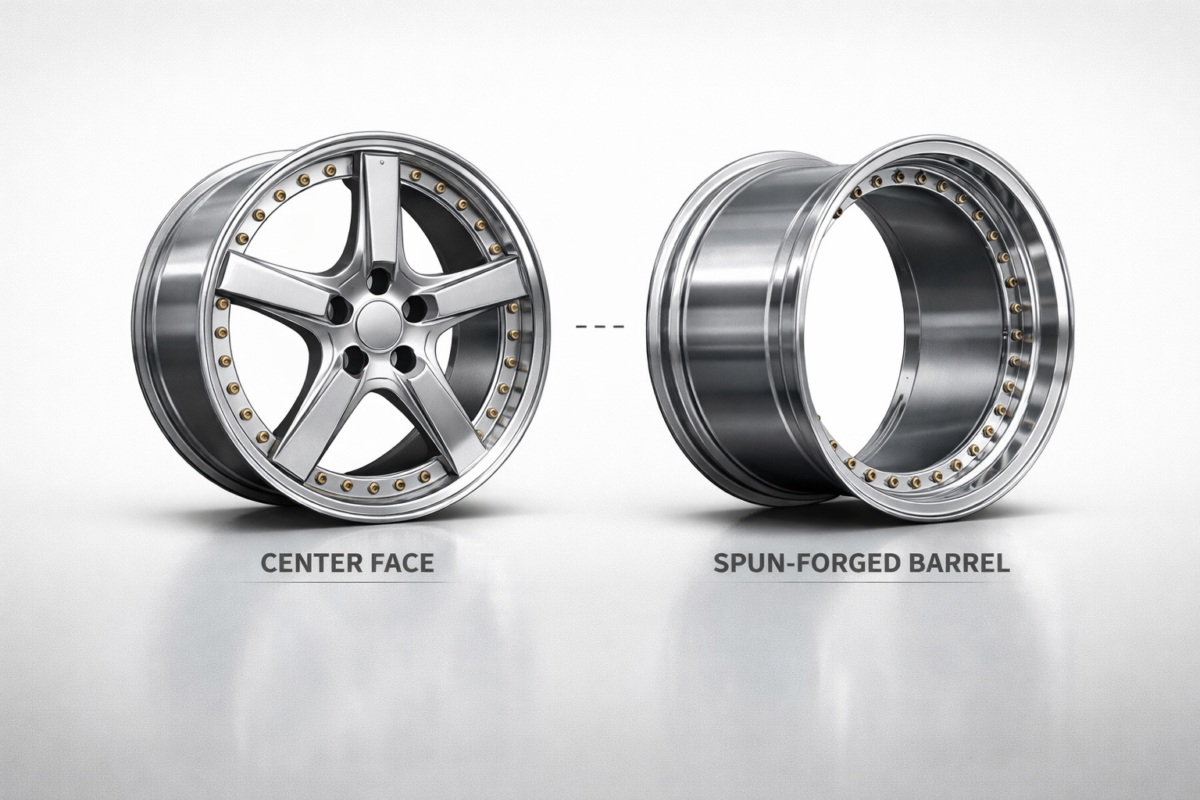
Two-piece forged wheels bridge the gap between the lightweight performance of a monoblock and the deep-dish aesthetics of a 3-piece wheel. They consist of two separate components: the forged center face (the spokes and hub) and the barrel.
How They Are Made
The center face is CNC-machined from a forged aluminum billet, similar to a monoblock. However, the barrel is typically formed using a flow-forming or spin-forging process. The face is then mated to the barrel. This connection is made in one of two ways:
-
Welded: The face is precisely positioned inside the barrel to the customer’s exact offset specification and then robotically TIG-welded in place.
-
Bolted: The face is bolted to a flange on the barrel using high-tensile hardware.
The Advantages
-
Flexible Offsets and Widths: Because the center face can be positioned anywhere inside the barrel before welding or bolting, 2-piece wheels offer infinite offset adjustments, millimeter by millimeter.
-
Contrasting Finishes: You can specify entirely different finishes for the face and the barrel (e.g., a matte black face with a gloss bronze barrel), adding a rich, custom aesthetic.
-
Cost-Effective Modularity: They offer a customized, deep-dish look often at a lower price point and lighter weight than a full 3-piece configuration.
The Disadvantages
-
Heavier than Monoblocks: The overlapping metal where the face meets the barrel, along with the welding material or assembly bolts, adds rotational mass.
-
Repair Limitations: While a bolted 2-piece wheel can sometimes have its face removed and transferred to a new barrel, welded 2-piece wheels are permanently joined, meaning a severely damaged barrel might require replacing the whole unit.
Best Applications
Two-piece forged wheels are ideal for widebody builds, luxury sedans, and high-end SUVs where owners desire aggressive, custom offsets and striking visual contrasts without taking on the maintenance and highest price tier of 3-piece wheels.
3-Piece Forged Wheels: The Pinnacle of Bespoke Fitment
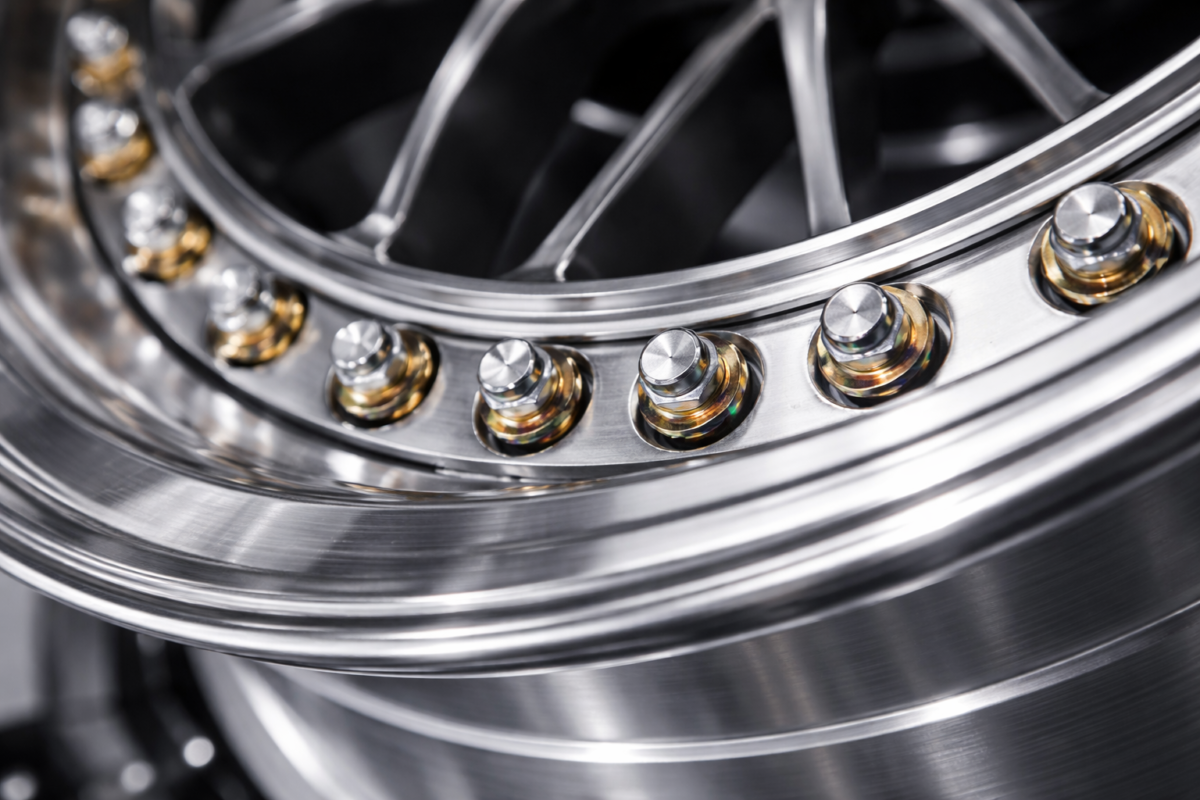
For decades, the 3-piece forged wheel has been the ultimate status symbol in the custom car community. It represents the absolute zenith of modular engineering and bespoke tailoring. As the name indicates, these wheels are assembled from three distinct components: a forged center face, an inner barrel, and an outer lip.
How They Are Made
The center face is CNC machined from forged billet. The inner barrel and outer lip are usually spun-forged from 6061-T6 aluminum sheets. These three pieces are stacked together, sandwiching the center face between the inner barrel and outer lip. They are then bolted together using a ring of 30 to 40 high-strength fasteners (often aerospace-grade titanium or stainless steel). Finally, a specialized silicone sealant is applied along the interior seam where the three pieces meet to ensure the tire holds air perfectly.
The Advantages
-
Limitless Width and Lip Sizes: Because the inner barrel and outer lip are separate pieces, you can mix and match sizes. Want a massive 6-inch polished outer lip on the rear of your Porsche? A 3-piece wheel makes it possible.
-
Ultimate Repairability: If you hit a curb and severely damage the outer lip, you do not need to buy a new wheel. You simply unbolt the wheel, order a replacement outer lip from the manufacturer, and rebuild it.
-
Hyper-Customization: Every single component—the face, the inner barrel, the outer lip, and even the assembly hardware—can be customized with different colors, textures, and finishes.
The Disadvantages
-
The Heaviest Forged Option: The overlapping flanges of the three components, combined with the ring of heavy-duty assembly bolts, make 3-piece wheels the heaviest of the forged category.
-
Maintenance Required: The silicone seal that holds the air inside the tire can eventually degrade over many years or under extreme track heat, requiring the wheel to be disassembled and resealed to prevent slow air leaks.
-
Highest Cost: The complex manufacturing, multiple components, and intensive hand-assembly process make 3-piece wheels the most expensive investment.
Best Applications
Three-piece wheels are the undisputed kings of the show car circuit, ultra-luxury exotics, and classic car restomods where achieving a millimeter-perfect, ultra-wide stance with massive lips is the primary goal.
Head-to-Head Comparison: Monoblock vs. 2-Piece vs. 3-Piece
To simplify your decision-making process, here is a quick-reference table comparing the critical attributes of each wheel type:
| Feature | Monoblock (1-Piece) | 2-Piece Forged | 3-Piece Forged |
| Weight | Lightest (Best Performance) | Moderate | Heaviest (Due to hardware) |
| Structural Rigidity | Highest | High | High |
| Custom Offsets | Moderate (Restricted by blank) | Excellent (Infinite adjustability) | Ultimate (Mix & match lips/barrels) |
| Aesthetic Finishes | Single finish (typically) | Dual finishes possible | Limitless combinations |
| Repairability | Poor (Replace entire wheel) | Fair (If bolted, barrel replaceable) | Excellent (Replace individual parts) |
| Price Point | Premium | Premium to High | Highest |
| Primary Use Case | Track, Supercars, Performance EVs | Widebody, Luxury SUVs, Stance | Show cars, Stance, Exotics |
What Distributors and OEM Partners Need to Know
For B2B buyers, wholesale distributors, and tuning shops, navigating the forged wheel market requires strategic inventory planning. Understanding your local market demographic is key to maximizing margins and customer satisfaction.
Inventory Flexibility vs. Custom Margins
-
Stocking Monoblocks: Monoblock wheels, due to their slightly lower manufacturing time and immense popularity among performance drivers, are excellent candidates for in-stock wholesale inventory. Popular fitments for high-volume sports cars (e.g., BMW M-series, Audi RS, Ford Mustang) can be stocked to provide immediate delivery to eager retail customers.
-
Selling Multi-Piece Wheels: 2-piece and 3-piece wheels are almost exclusively handled as custom, made-to-order (MTO) products. While they cannot be easily stocked, they offer incredibly high profit margins. Distributors can act as bespoke consultants, guiding end-users through the intricate design, finish, and fitment processes.
Why Partner with CN Wheel Rims (CNWR)?
At CNWR, we specialize in empowering our B2B partners. As a premier global OEM wheel supplier, our factory is equipped with 10,000+ ton hydraulic presses and the latest multi-axis CNC machining centers.
-
OEM/ODM Services: Want to launch your own brand of forged wheels? CNWR provides end-to-end white-label manufacturing. You provide the design concept, and our engineering team handles the Finite Element Analysis (FEA), milling, finishing, and global logistics.
-
Comprehensive Catalog: We manufacture monoblock, 2-piece, and 3-piece custom forged wheels, giving your distributorship a complete, uncompromised product line.
-
Stringent Quality Control: Every wheel that leaves our facility undergoes rigorous radial fatigue, impact, and runout testing to ensure it meets global safety standards, protecting your business’s reputation.
Frequently Asked Questions (FAQs)
1. Do 3-piece wheels leak air easily?
When assembled correctly by a professional manufacturer like CNWR, a 3-piece wheel will not leak under normal conditions. High-grade aerospace silicone is used to seal the barrel and lip. However, after many years of use, or if subjected to extreme sustained track heat, the sealant may eventually need to be reapplied.
2. Are 1-piece monoblock wheels strong enough for heavy SUVs?
Absolutely. Because they are milled from a solid forged billet, monoblocks boast incredibly high load ratings. Manufacturers engineer specific monoblock designs with thicker spokes and reinforced hubs specifically to handle the immense weight of luxury SUVs and modern battery-electric vehicles.
3. Which wheel type takes the longest to manufacture?
Three-piece custom forged wheels generally have the longest lead times. Because they involve machining three separate components, sourcing specific assembly hardware, applying custom finishes to each part, and a meticulous hand-assembly and sealing process, they are highly labor-intensive.
4. Can I convert a 2-piece wheel into a 3-piece wheel?
Generally, no. The center face of a 2-piece wheel is engineered with a specific mounting flange designed to mate with a 2-piece spun barrel. It does not have the correct flange architecture to sandwich an inner barrel and outer lip with assembly bolts safely.
Conclusion
The choice between a monoblock, 2-piece, and 3-piece forged wheel ultimately dictates the character of your vehicle.
If uncompromising performance, unsprung weight reduction, and track-ready rigidity are your goals, the monoblock stands alone. If you require deep, aggressive lips and infinite offset adjustability without pushing to the highest price tier, the 2-piece wheel is a brilliant compromise. And if your build demands absolute bespoke perfection, limitless customization, and the prestige of modular engineering, the 3-piece wheel reigns supreme.
At CNWR (CN Wheel Rims), we don’t just sell wheels; we engineer automotive excellence. Whether you are an individual searching for that perfect set of custom forged wheels, or a global distributor seeking a reliable, high-capacity OEM wheel supplier, our manufacturing capabilities are at your disposal.