

Introduction
In the highly competitive automotive aftermarket and OEM sectors, the wheels you choose dictate much more than just the aesthetic appeal of a vehicle. They are a critical component defining handling, braking efficiency, ride quality, and overall safety. At the absolute pinnacle of wheel technology sits one category: forged wheels.
For automotive enthusiasts, performance car owners, and B2B buyers looking to source premium automotive components, understanding the intricacies of forged wheels is non-negotiable. Whether you are outfitting a high-performance track weapon, a luxury grand tourer, or looking to stock your dealership with the highest-margin, highest-quality products, forged aluminum wheels represent the gold standard.
This comprehensive guide delves deep into the world of forged wheels. We will explore what they are, the rigorous wheel manufacturing process that brings them to life, how they stack up against traditional cast wheels, and why CN Wheel Rims (CNWR) is the premier OEM wheel supplier for global markets.
What Are Forged Wheels?
The Definition
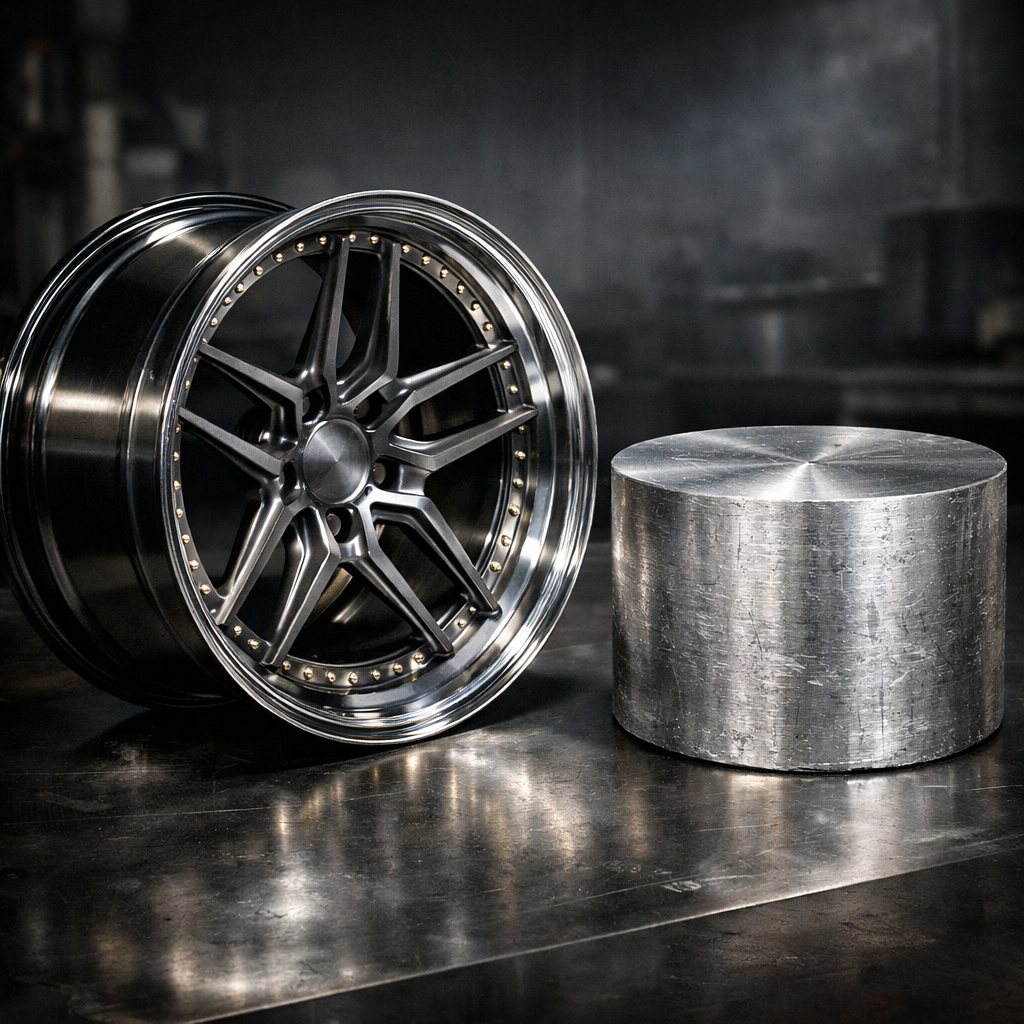
Forged wheels are automotive rims manufactured from a solid block of aerospace-grade aluminum (commonly 6061-T6) that is subjected to immense heat and extreme pressure to form the shape of the wheel. Unlike casting, where metal is melted into a liquid state and poured into a mold, forging shapes the metal while it remains in a solid state.
The Basic Concept of Forging vs. Casting
To understand the superiority of forged wheels, one must understand the metallurgical difference between forging and casting.
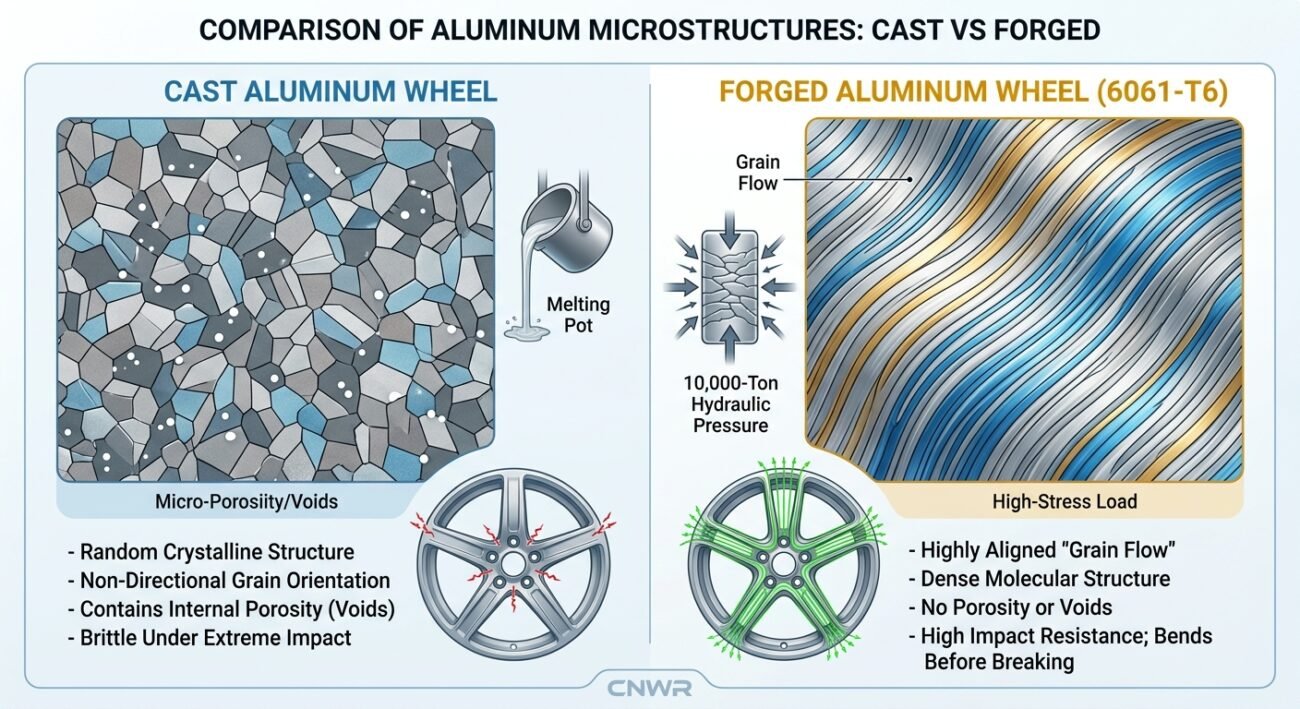
When aluminum is cast, the melting process alters the grain structure of the metal. As it cools in the mold, porosity (microscopic air pockets) can form, leading to potential weak points. To compensate for these material inconsistencies, cast wheels must be made thicker and heavier to achieve the necessary strength and load ratings.
Forging, conversely, forces the solid aluminum’s grain structure to flow and align with the shape of the wheel. This intense compression eliminates porosity and creates an incredibly dense, interlocking microscopic grain structure. The result is a material with vastly superior tensile and yield strength, allowing manufacturers to use less material (reducing weight) while achieving higher structural integrity.
How Forged Wheels Are Made: The Manufacturing Process
The creation of forged aluminum wheels is a marvel of modern engineering, requiring state-of-the-art technology, heavy machinery, and precise metallurgy. Here is the step-by-step wheel manufacturing process.
1. The Raw Material: 6061-T6 Aerospace-Grade Aluminum
The journey begins with a solid cylinder of premium aluminum, known as a billet. The industry standard for high-end forged wheels is 6061-T6 aluminum. This specific alloy is blended with magnesium and silicon, offering an exceptional strength-to-weight ratio, outstanding corrosion resistance, and excellent machinability. The “T6” designation indicates that the metal has been solution heat-treated and artificially aged to achieve maximum structural integrity.
2. Heating and Pressing (The Forging Process)
The aluminum billet is heated to approximately 400°C to 450°C—hot enough to make the metal malleable but well below its melting point. It is then placed into a massive hydraulic forging press. These presses apply anywhere from 8,000 to 12,000 tons of raw pressure, crushing the billet into a rough wheel blank (often called a “forging”). This extreme pressure aligns the metal’s grain structure, creating the densest possible material.
3. Spin Forging / Flow Forming (For the Barrel)
For certain wheel designs, particularly the barrels of the wheel, a secondary process called flow forming or spin forging is utilized. The heated forging is spun at high speeds while hydraulic rollers apply intense pressure to the outer barrel, stretching and compressing the aluminum to its final width. This further aligns the grain structure in the barrel, mirroring the strength benefits of the initial forging process.
4. Heat Treatment
Once the rough shape is formed, the wheel undergoes a rigorous heat treatment process. It is rapidly cooled (quenched) and then slowly reheated (aged). This crucial step locks the molecular structure in place, maximizing the yield strength and durability of the forged aluminum wheels.
5. CNC Machining
The solid, heat-treated blank is then transferred to a multi-axis CNC (Computer Numerical Control) milling machine. Here, precise computer programs guide diamond-tipped cutting tools to carve out the wheel’s intricate face design, spokes, lug holes, center bore, and weight-reduction pockets. Because the forged material is so strong, CNC machines can shave the spokes incredibly thin without compromising safety.
6. Finishing and Quality Control
The final step involves hand-finishing, polishing, and applying the chosen coating—whether it be powder coating, brushing, anodizing, or a clear coat. Before leaving the facility, every wheel undergoes stringent quality control testing, including radial fatigue testing, impact testing, and X-ray scanning to ensure zero microscopic defects.
Forged Wheels vs Cast Wheels: A Comprehensive Comparison
For consumers and B2B buyers alike, the “forged vs cast wheels” debate is central to purchasing decisions. Here is a breakdown of how they compare.
| Feature | Forged Wheels | Cast Wheels |
| Manufacturing Process | Solid billet pressed under extreme heat/pressure | Molten aluminum poured into a mold |
| Material Density | Exceptionally high, aligned grain structure | Lower, random grain structure, prone to porosity |
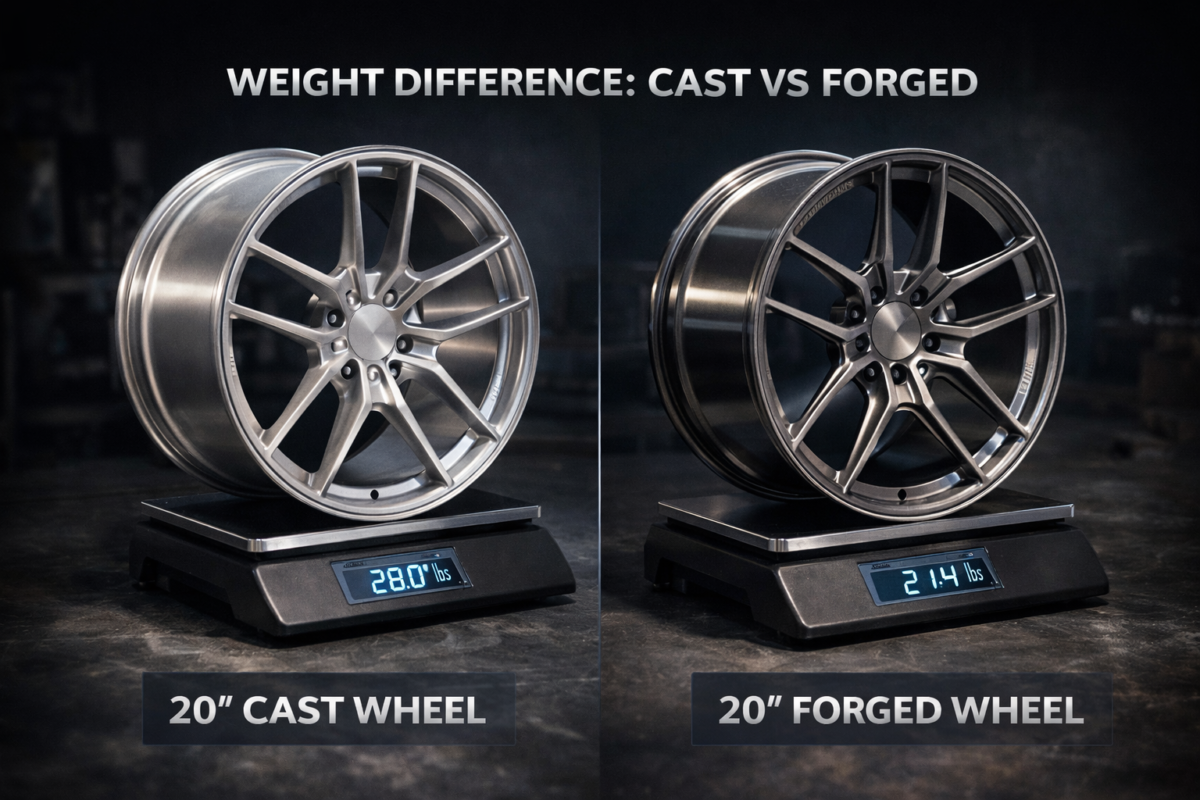
| Weight | Extremely lightweight (up to 25-30% lighter) | Heavier (requires more material for strength) |
| Strength & Durability | Maximum tensile and yield strength | Moderate strength, more susceptible to cracking |
| Design Complexity | Ultra-thin spokes and intricate CNC designs possible | Limited by mold flow and structural thickness needs |
| Performance Impact | Significantly improves handling, braking, and acceleration | Baseline performance, heavier unsprung mass |
| Cost | Premium investment | Budget-friendly |
Strength Comparison
Because of the aligned grain structure, forged wheels are vastly stronger than cast wheels. When subjected to extreme impacts (like hitting a severe pothole at high speeds), a cast wheel is more likely to shatter or crack. A forged wheel, due to its higher elasticity and yield strength, is more likely to bend, allowing the tire to hold air longer and ensuring driver safety.
Weight Differences and Unsprung Mass
Weight reduction is the primary reason motorsport teams and performance enthusiasts choose forged wheels. Wheels are part of a vehicle’s “unsprung mass” (the weight not supported by the vehicle’s suspension). Reducing unsprung mass by just a few pounds per wheel has an exponential effect on vehicle dynamics, making the suspension more responsive to road imperfections.
The Benefits of Forged Wheels
Investing in performance wheels yields tangible, real-world benefits for both the vehicle’s aesthetics and its dynamic capabilities.
1. Ultra-Lightweight Construction
As mentioned, the high density of forged aluminum means manufacturers can use less material to achieve the desired load rating. This drastic reduction in rotational mass means the engine doesn’t have to work as hard to turn the wheels, and the brakes don’t have to work as hard to stop them.
2. Enhanced Strength and Durability
Forged wheels offer an unparalleled load capacity relative to their weight. This makes them ideal not just for lightweight sports cars, but also for heavy luxury SUVs and extreme off-road vehicles that subject their suspension components to immense abuse.
3. Improved Vehicle Performance
-
Acceleration: Lower rotational inertia allows the vehicle to accelerate faster.
-
Braking: Reduced mass decreases stopping distances, reducing brake fade.
-
Handling: Less unsprung weight allows the suspension to react faster to bumps and corners, keeping the tire contact patch firmly planted on the road.
4. Better Heat Dissipation
The dense metallic structure of forged aluminum acts as a highly efficient heat sink. It draws heat away from the brake rotors and calipers much faster than cast aluminum, which is critical during spirited driving or track days.
5. Limitless Customization
Because forged wheels are CNC milled from a solid blank, they offer unmatched customization. Buyers can specify the exact diameter, width, offset, center bore, and bolt pattern, ensuring a millimeter-perfect fitment without the need for hub-centric rings or wheel spacers.
Types of Forged Wheels
Not all forged wheels are created equal. They are generally categorized by the number of pieces used in their construction.
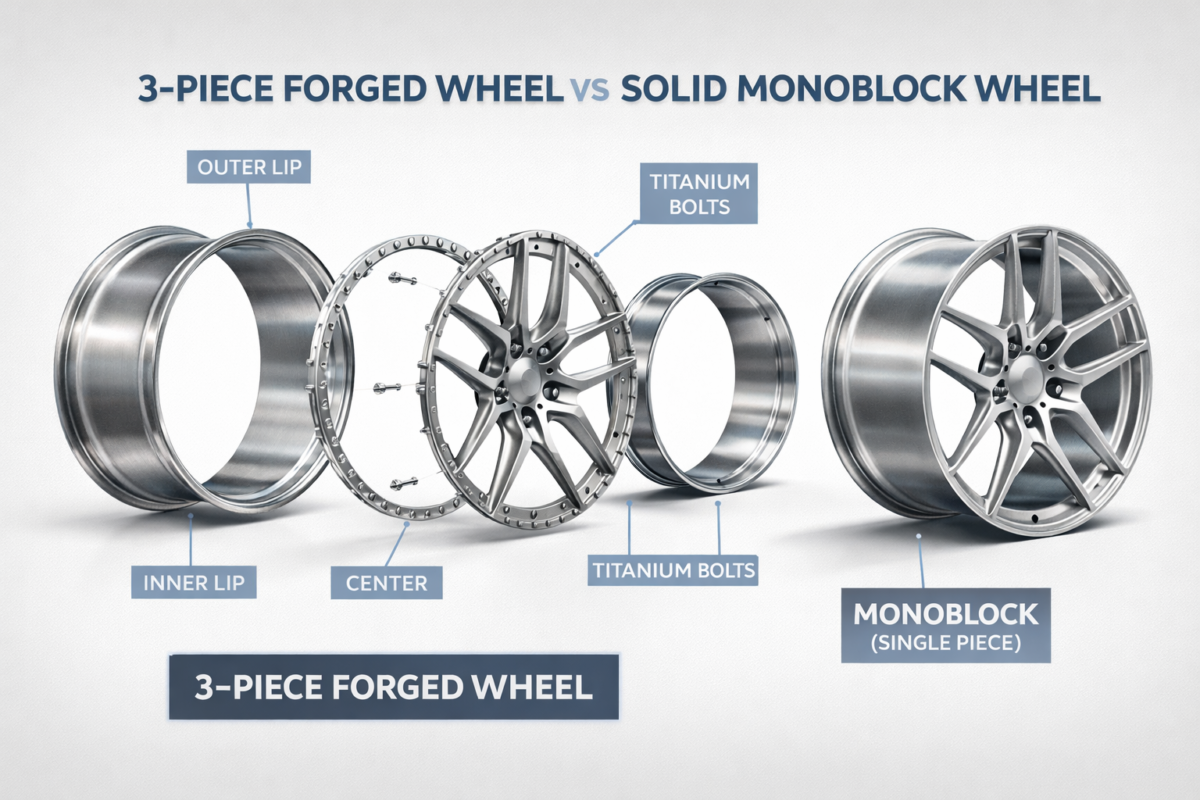
Monoblock (1-Piece) Forged Wheels
Monoblock wheels are machined from a single block of forged aluminum.
-
Pros: They are the lightest of all forged wheel types, offer the highest structural rigidity, and are the standard for track and performance use.
-
Cons: They offer less flexibility for extreme widths or hyper-customized offsets compared to multi-piece wheels.
2-Piece Forged Wheels
These consist of a forged center face that is bolted or welded to a spun-forged barrel.
-
Pros: Allows for more aggressive custom widths and offsets. The center face can be finished in a different color or texture than the barrel.
-
Cons: Slightly heavier than monoblocks due to the hardware or welding material.
3-Piece Forged Wheels
Comprising three distinct parts: a forged center face, an inner barrel, and an outer lip. These parts are sealed with silicone and bolted together using high-strength titanium or steel hardware.
-
Pros: The ultimate in customization. Buyers can choose massive outer lips. If a lip or barrel is damaged, it can be replaced individually without buying an entirely new wheel.
-
Cons: The heaviest and most expensive of the forged options. Requires routine maintenance to ensure the silicone seal remains airtight.
Custom Forged Wheels Explained: A B2B Perspective
For B2B buyers—including distributors, wholesale networks, and tuning shops—offering custom forged wheels is a high-margin, high-prestige business strategy.
Custom Sizing, Offset, and PCD
Custom wheels allow dealers to cater to niche markets. Whether a customer is building a widebody Porsche 911 that requires a unique ET (offset) to fill the arches perfectly, or modifying a classic car with an obscure PCD (Pitch Circle Diameter / bolt pattern), custom CNC machining solves these fitment issues natively.
Finishes and Design Options
Customization extends far beyond sizing. B2B partners can offer clients bespoke finishes that cannot be mass-produced efficiently:
-
Hand-brushed clear coats
-
High-luster polishing
-
Candy color powder coats
-
Carbon fiber inlays
-
Custom center cap engraving
Advantages for B2B Buyers
Partnering with a reliable OEM wheel supplier for custom forged wheels allows distributors to offer a premium product line with substantial profit margins. It elevates the brand prestige of the retail shop and builds extreme customer loyalty, as clients are receiving a truly one-of-one product.
Applications of Forged Wheels
Sports Cars and Supercars
Vehicles like the Ferrari F8, Porsche 911 GT3, and Chevrolet Corvette demand lightweight wheels to maximize their power-to-weight ratios and ensure precise steering feedback at high speeds.
Luxury Vehicles
Heavy luxury sedans and SUVs (e.g., Mercedes-Maybach, Range Rover) require wheels with exceptionally high load ratings. Forged wheels provide the necessary strength to support heavy chassis without adding excessive, ride-ruining unsprung weight.
Off-Road and Overland Vehicles
Off-road trucks subject their wheels to violent impacts from rocks and ruts. Forged beadlock wheels provide the ultimate durability, preventing rim failure in remote, harsh environments.
Motorsport
In Formula 1, WEC, and GT racing, every fraction of a second counts. Forged magnesium and aluminum wheels are mandatory equipment for their strength, heat dissipation, and featherweight characteristics.
Why Choose a Professional Wheel Manufacturer: The CNWR Advantage
If you are a distributor, dealer, or OEM looking to source high-quality wheels, your supply chain is only as strong as your manufacturer. CN Wheel Rims (CNWR) stands out as a globally trusted professional wheel manufacturer.
Unmatched Manufacturing Capabilities
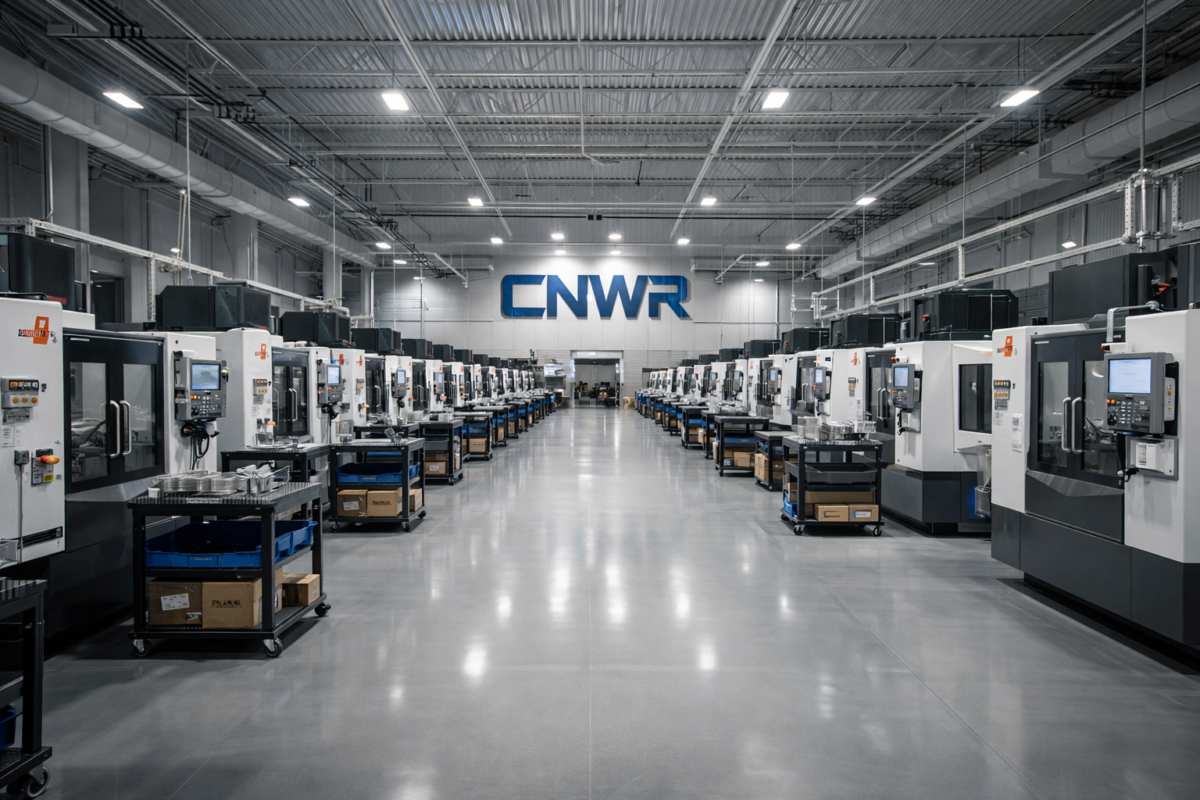
Operating via cnwheelrims.com, CNWR utilizes the latest 10,000+ ton hydraulic presses and 5-axis CNC machining centers. We specialize in producing both in-stock wheels for rapid deployment and fully custom forged wheels tailored to exact client specifications.
OEM / ODM Services
CNWR is a premier OEM wheel supplier. We offer extensive OEM (Original Equipment Manufacturer) and ODM (Original Design Manufacturer) services. If your brand wants to launch its own proprietary line of forged wheels, CNWR provides end-to-end solutions—from CAD design and FEA (Finite Element Analysis) to manufacturing and white-label packaging.
Rigorous Quality Control
Safety is our ultimate priority. Every CNWR wheel undergoes comprehensive testing, including:
-
Dynamic radial fatigue testing
-
Cornering impact testing
-
Precision runout measurement
-
Microscopic flaw detection via X-ray
Our products meet and exceed global safety standards, ensuring peace of mind for B2B buyers and end-users alike.
Global Supply Ability
With a robust logistics network, CNWR exports premium wheels to the United States, Europe, Southeast Asia, the Middle East, and Australia. Whether you require a wholesale container of in-stock wheels or dropshipping for custom 1-of-1 orders, we have the infrastructure to deliver on time, worldwide.
How to Choose the Right Forged Wheels
For consumers and dealers assisting clients, choosing the right wheel involves several critical checks:
-
Fitment Considerations: Ensure the offset (ET) and width will not cause the tire to rub against the fender or suspension struts. Furthermore, ensure the inner barrel has adequate clearance for big brake kits (BBK).
-
Budget vs. Performance: While monoblock wheels offer the best performance-per-dollar, multi-piece wheels offer better aesthetic customization at a higher price point.
-
Certifications: Always look for wheels that comply with stringent global standards. Key certifications include TÜV (Germany/Europe), JWL (Japan Light Alloy Wheel standard), and VIA (Vehicle Inspection Association). These marks guarantee the wheel has passed brutal safety stress tests.
Maintenance & Care Tips
Protecting the investment of custom forged wheels requires proper maintenance:
-
Cool Before Cleaning: Never wash wheels while they are hot from driving; rapid cooling can warp rotors and cause cleaning chemicals to bake into the finish.
-
Use pH-Neutral Cleaners: Avoid acidic wheel cleaners that can strip clear coats or stain raw anodized/brushed finishes.
-
Ceramic Coating: Applying a high-temperature ceramic coating makes cleaning brake dust incredibly easy and protects the finish from UV fading.
-
Regular Inspections: Periodically check multi-piece wheels for proper torque on the assembly bolts, and inspect all wheels for inner barrel bends if subjected to rough roads.
Frequently Asked Questions (FAQs)
Are forged wheels worth it?
Absolutely. For performance driving, track use, or heavy luxury vehicles, the reduction in unsprung weight and the massive increase in structural strength drastically improve handling, safety, and acceleration. They are a premium investment that yields tangible driving benefits.
Why are forged wheels expensive?
The high cost is due to the intensive manufacturing process. Aerospace-grade 6061-T6 aluminum billets are expensive raw materials. Furthermore, the machinery required—such as 10,000-ton hydraulic presses and multi-axis CNC machines—represents millions of dollars in capital investment. Finally, the machining time per wheel is significantly longer than simply pouring molten metal into a cast.
How long do forged wheels last?
Under normal driving conditions, forged wheels can outlast the lifespan of the vehicle itself. Because of their high yield strength, they are highly resistant to cracking and bending. With proper care and avoidance of severe accident damage, they are a lifetime component.
Are forged wheels better for daily driving?
Yes. While they are born from motorsport, the benefits translate perfectly to daily driving. The lighter weight improves fuel economy slightly and makes the vehicle’s suspension more comfortable over bumps. Furthermore, their superior strength means they are less likely to be destroyed by unexpected city potholes compared to brittle cast wheels.
Conclusion
Forged wheels represent the absolute pinnacle of automotive wheel engineering. By utilizing extreme heat, immense pressure, and precision CNC machining, the wheel manufacturing process transforms a solid block of aluminum into a lightweight, incredibly strong, and visually stunning automotive masterpiece.
Whether you are looking to shave seconds off your lap time, support the weight of a customized luxury SUV, or offer your B2B clientele the finest aftermarket components available, forged aluminum wheels are the undeniable choice.
Ready to elevate your inventory or build the perfect set of wheels? Partner with a globally trusted professional wheel manufacturer. Explore our vast catalog of in-stock wheels, or let us bring your unique designs to life through our custom OEM/ODM services.