


Introduction
The atmosphere of a track day is unmistakable. It is a symphony of roaring engines, the sharp scent of burning rubber, and the intense heat radiating from massive brake calipers. For automotive enthusiasts and professional racers alike, the track is the ultimate proving ground. It ruthlessly exposes any mechanical weakness in a vehicle.
While engine tuning, aerodynamic upgrades, and suspension modifications often steal the spotlight, one of the most critical upgrades a driver can make is frequently misunderstood: the wheels. When pushing a vehicle to its absolute limits, standard cast wheels become a liability.
For B2B distributors, performance tuning shops, and motorsport teams, understanding the profound engineering differences between wheel manufacturing methods is crucial for both safety and sales. In this comprehensive guide, Shanghai ChenCheChi Technology Co., Ltd. (CNWR) explores the physics of track day performance, detailing exactly why forged wheels are the undisputed choice over cast alternatives when it comes to heat dissipation, structural rigidity, and extreme environmental safety.

The Physics of the Track: Understanding Wheel Stress
To appreciate the necessity of forged wheels, one must first understand the violent physical forces at play on a race circuit. A track environment subjects a vehicle to continuous, extreme stress that simply does not exist on public roads.
Extreme Lateral Loads and Structural Rigidity
When a car enters a high-speed corner, the vehicle’s weight shifts dramatically to the outside wheels. This generates immense lateral G-forces. If a wheel lacks sufficient rigidity, the barrel and spokes will physically flex under this load.
Wheel flex is disastrous for track day performance for two primary reasons:
-
Contact Patch Distortion: As the wheel bends, it alters the tire’s contact patch with the asphalt, drastically reducing grip and causing unpredictable handling (understeer or oversteer).
-
Brake Caliper Interference: In severe cases of wheel flex, the inner barrel of the wheel can actually make contact with the brake caliper, leading to catastrophic mechanical failure.
The Impact of Modern Control Algorithms and EV Torque
The automotive industry is rapidly evolving, and modern track vehicles—particularly high-performance electric vehicles (EVs)—rely heavily on advanced control algorithms for active torque vectoring and traction control. These complex electronic systems make micro-adjustments milliseconds at a time, calculating slip angles and transferring violent, instantaneous bursts of torque directly to the wheel hub to maintain stability.
A traditional cast wheel simply cannot process these sudden algorithmic torque transfers without microscopic flexing. A fully forged wheel, however, possesses the absolute rigidity required to translate these rapid electronic commands into immediate, precise mechanical action on the tarmac, ensuring the vehicle reacts exactly as the software intended.

Heat Dissipation: The Unseen Killer of Track Times
Speed is generated by the engine, but lap times are dictated by the brakes. Repeated heavy braking from high speeds generates immense thermal energy.
Brake Fade and Thermal Dynamics
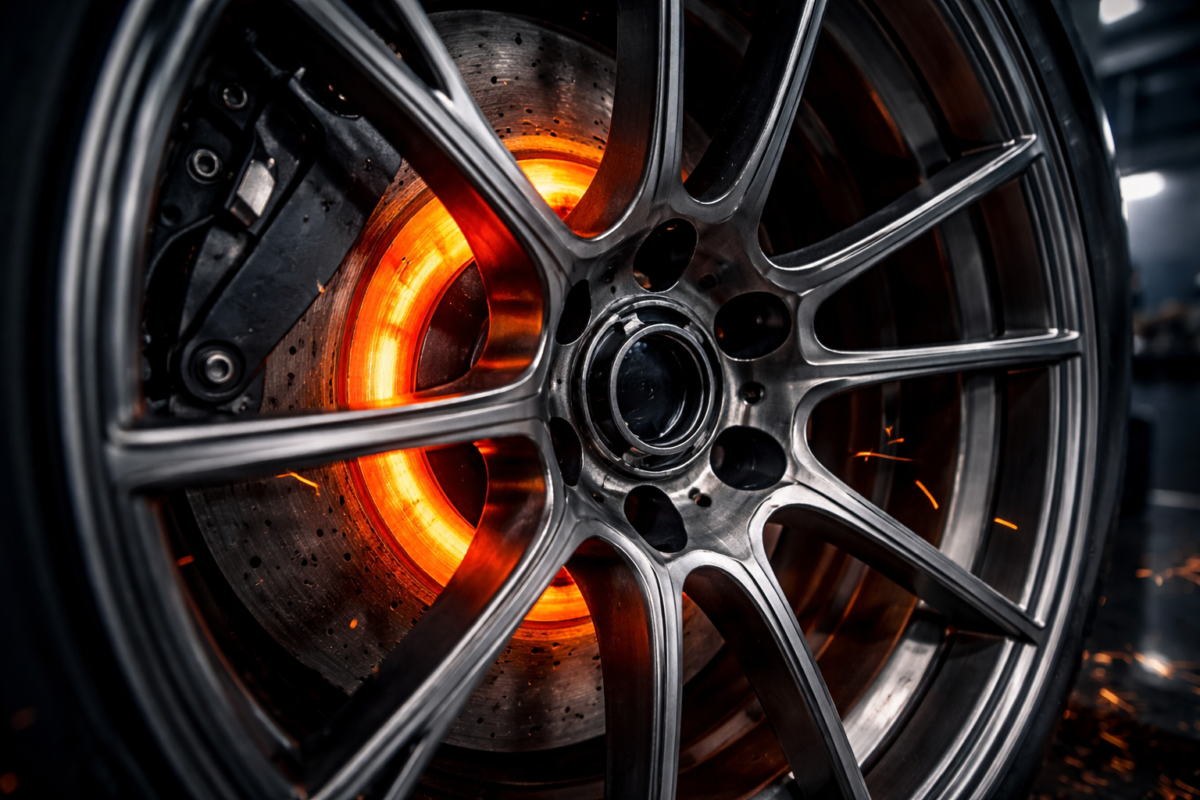
On a track, brake rotors can easily reach temperatures exceeding 600°C (1100°F). This heat radiates directly into the wheel hub and barrel. If this heat is not managed, it leads to two dangerous phenomena:
-
Brake Fade: The brake fluid boils, resulting in a spongy pedal and a total loss of stopping power.
-
Tire Degradation: Excessive heat transfers from the wheel to the tire, causing the rubber to overheat, become greasy, and lose traction rapidly.
How 6061-T6 Aluminum Manages Heat
This is where the metallurgical superiority of forged wheels becomes a critical performance advantage. CNWR forged wheels are manufactured using aerospace-grade 6061-T6 aluminum alloy.
Cast wheels are naturally porous; the microscopic air pockets trapped within the cast metal act as thermal insulators, trapping heat around the brakes. In contrast, the high-pressure forging process (utilizing 10,000-ton hydraulic presses) creates an incredibly dense, unified grain structure within the aluminum.
This dense, non-porous structure turns the forged wheel into a highly efficient heat sink. It rapidly absorbs thermal energy from the brake hub and dissipates it into the passing air stream, significantly lowering overall brake operating temperatures and preserving both brake and tire life during long track sessions.
Uncompromising Safety in Extreme Environments
Motorsport is inherently dangerous. Whether it is clipping an aggressive apex curb (FIA “sausage kerbs”), dropping a wheel into the dirt at 130 mph, or enduring the sustained vibrations of an endurance race, track wheels take a severe beating.
Metallurgical Superiority: Grain Structure Explained
The fundamental difference between cast and forged wheels lies in their molecular architecture.
-
Casting involves pouring molten aluminum into a mold. As it cools, the metal’s grain structure is random and often contains microscopic voids (porosity). Under sudden, extreme impact, cast wheels are brittle. They do not bend; they crack or shatter, which can lead to explosive tire blowouts and loss of vehicle control.
-
Forging starts with a solid billet of aluminum. The intense heat and pressure used to shape the wheel align the metallic grain structure along the contours of the wheel’s design.
Yield Strength vs. Catastrophic Failure
Because of this aligned grain structure, forged wheels possess remarkably high tensile and yield strength. When a forged wheel strikes a severe track hazard, it will deform or bend slightly rather than shattering.
This characteristic allows the tire to remain seated and maintain air pressure, giving the driver the crucial opportunity to safely control the vehicle and return to the pit lane. In the high-stakes environment of track racing, this difference in failure modes saves cars—and lives.
Cast vs. Flow-Formed vs. Forged: A Data-Driven Comparison
To assist B2B buyers in educating their retail clients, here is a clear breakdown of wheel manufacturing technologies regarding track use:
| Manufacturing Process | Structural Rigidity | Heat Dissipation | Impact Failure Mode | Track Suitability |
| Gravity Cast | Low (Prone to flex) | Poor (Insulates heat) | Brittle (Cracks/Shatters) | Not Recommended |
| Flow-Formed | Moderate | Moderate | Variable | Acceptable for light track use |
| Fully Forged (CNWR) | Ultimate (Zero flex) | Excellent (Heat sink) | Malleable (Bends/Deforms) | Highly Recommended (Professional) |
Why Distributors Source from CNWR
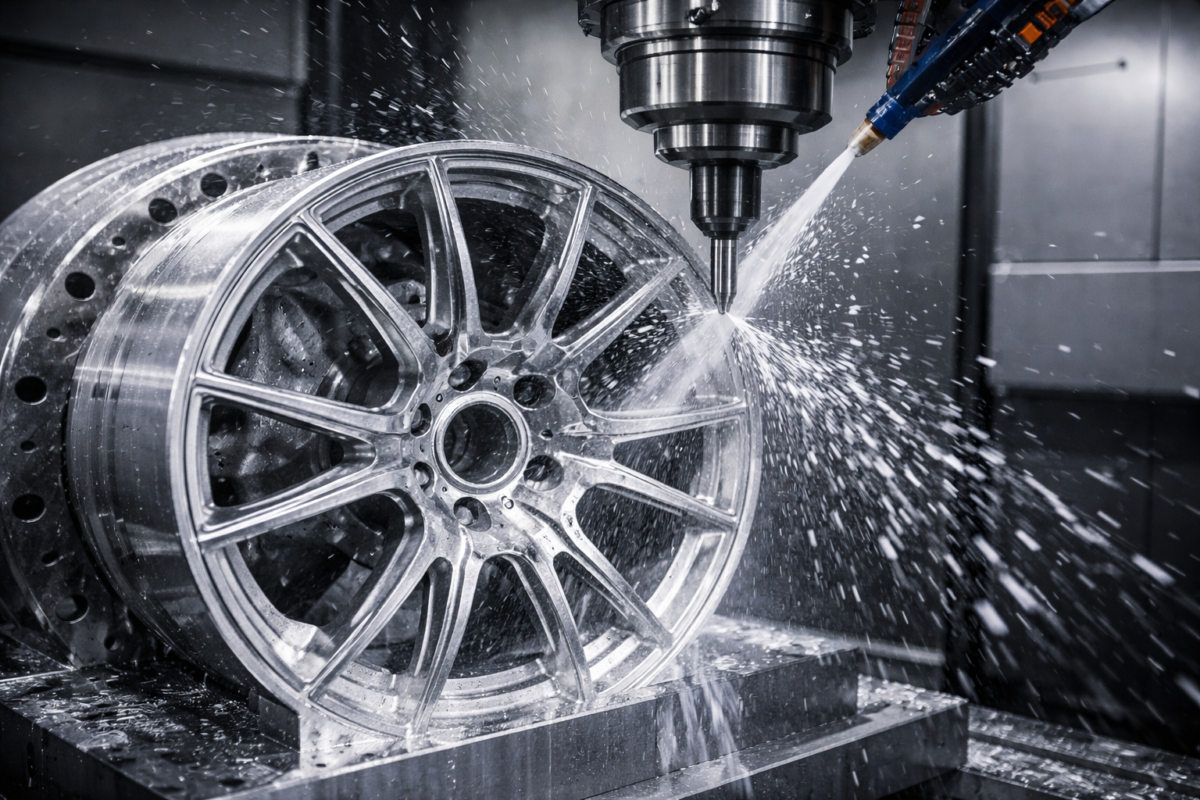
At Shanghai ChenCheChi Technology Co., Ltd., our approach to wheel manufacturing mirrors elite hardware development. We do not merely pour metal into molds; we engineer precise structural components designed to withstand the harshest environments on earth.
For distributors, tuning houses, and B2B wholesale buyers, partnering with the right manufacturer is essential for protecting your brand reputation. Selling wheels to track enthusiasts means you are selling safety equipment.
OEM/ODM Capabilities for Motorsport Brands
Under our CNWR brand, we provide comprehensive OEM and ODM services tailored for the performance sector.
-
Custom Engineering: Using advanced Finite Element Analysis (FEA), we design wheels that shed every gram of unnecessary unsprung weight without compromising the load rating required for high-G track driving.
-
Bespoke Clearances: We engineer custom offsets and barrel profiles to ensure massive aftermarket Big Brake Kits (BBK) clear the wheel spokes perfectly.
-
Knurled Bead Seats: For our track-focused B2B clients, we offer anti-slip knurled bead seats to prevent the tire from rotating on the rim under extreme acceleration and heavy braking.
When you source from CNWR, you are procuring a product that meets rigorous international safety standards (TUV, JWL/VIA), ensuring your clients dominate the track while returning home safely.
Frequently Asked Questions (FAQs)
Q1: How much unsprung weight can I save by switching from cast to forged track wheels?
A: Depending on the design and size, a forged wheel can be 20% to 30% lighter than a cast wheel of the same dimensions. Reducing unsprung mass significantly improves suspension response, acceleration, and braking efficiency, translating directly to faster lap times.
Q2: Do forged wheels really help my brakes last longer on the track?
A: Yes. The dense grain structure of 6061-T6 forged aluminum acts as a highly efficient thermal conductor. It pulls heat away from the brake rotors and calipers much faster than porous cast wheels, reducing the risk of brake fade and extending the life of your brake pads and fluid.
Q3: Does CNWR offer custom fitments for dedicated track cars?
A: Absolutely. Shanghai ChenCheChi Technology Co., Ltd. specializes in bespoke fitments. We can manufacture wheels with precise PCDs, center bores, and aggressive offsets required for wide-body track cars, ensuring perfect fitment without the need for dangerous wheel spacers.
Q4: Are flow-formed wheels just as good as forged wheels for racing?
A: While flow-formed (or rotary forged) wheels are stronger and lighter than standard cast wheels, they only strengthen the barrel. The face and spokes remain cast. For professional or heavy track day use, a fully forged wheel is the only way to ensure maximum rigidity and safety across the entire wheel structure.
Conclusion
When it comes to track day performance, the margin between a personal best lap and a catastrophic failure is razor-thin. Professional racers and dedicated enthusiasts do not choose forged wheels merely for their aesthetic appeal; they rely on them as critical performance and safety hardware.
The unparalleled rigidity, superior thermal dissipation, and predictable impact behavior of forged aluminum make it the only logical choice for high-stress track environments.
For B2B buyers and performance distributors, aligning with a world-class manufacturer is the key to capturing the lucrative motorsport market. Shanghai ChenCheChi Technology Co., Ltd. (CNWR) is your premier partner for custom, high-performance forged wheels. Elevate your inventory and offer your clients the competitive edge they demand.