
The Ultimate Wheel Fitment Guide
Perfect Fitment. Ultimate Performance. Zero Compromise.
As a professional global wheel manufacturer, we know that manufacturing a high-quality wheel is only half the battle; ensuring it fits the vehicle perfectly is what guarantees safety, performance, and customer satisfaction.
01.Bolt Pattern / PCD
(Pitch Circle Diameter)
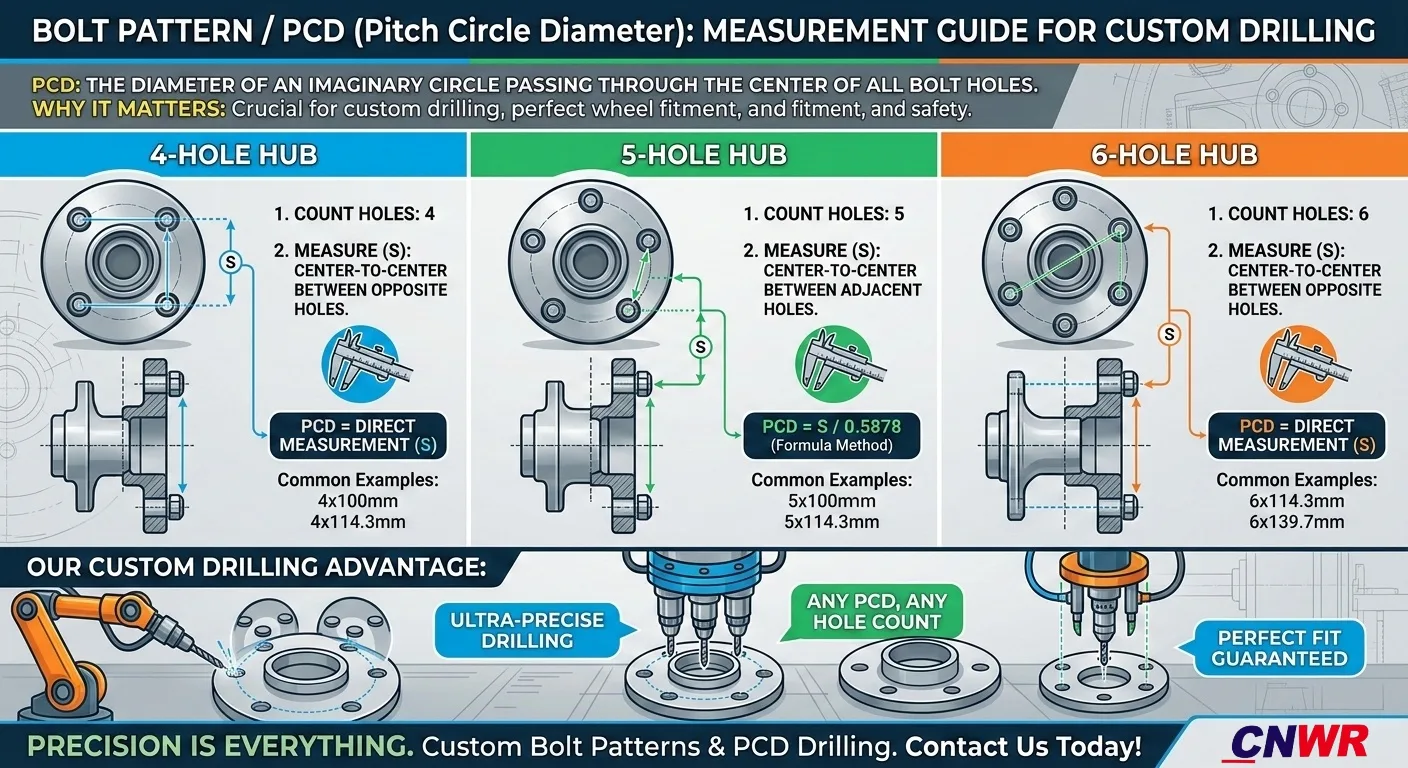
The bolt pattern (or PCD) represents the number of lug holes and the diameter of the imaginary circle they form. It is usually expressed as Number of Lugs x Diameter (in mm or inches).
- Example: 5x114.3 means there are 5 lug holes evenly spaced on a circle with a 114.3mm diameter.
CNWR Advantage: We stock a massive range of "Blank Wheels" (un-drilled center pads). This allows our CNC engineering team to custom-drill any PCD to meet your specific regional market demands within days.
02.Offset (ET) & Backspacing
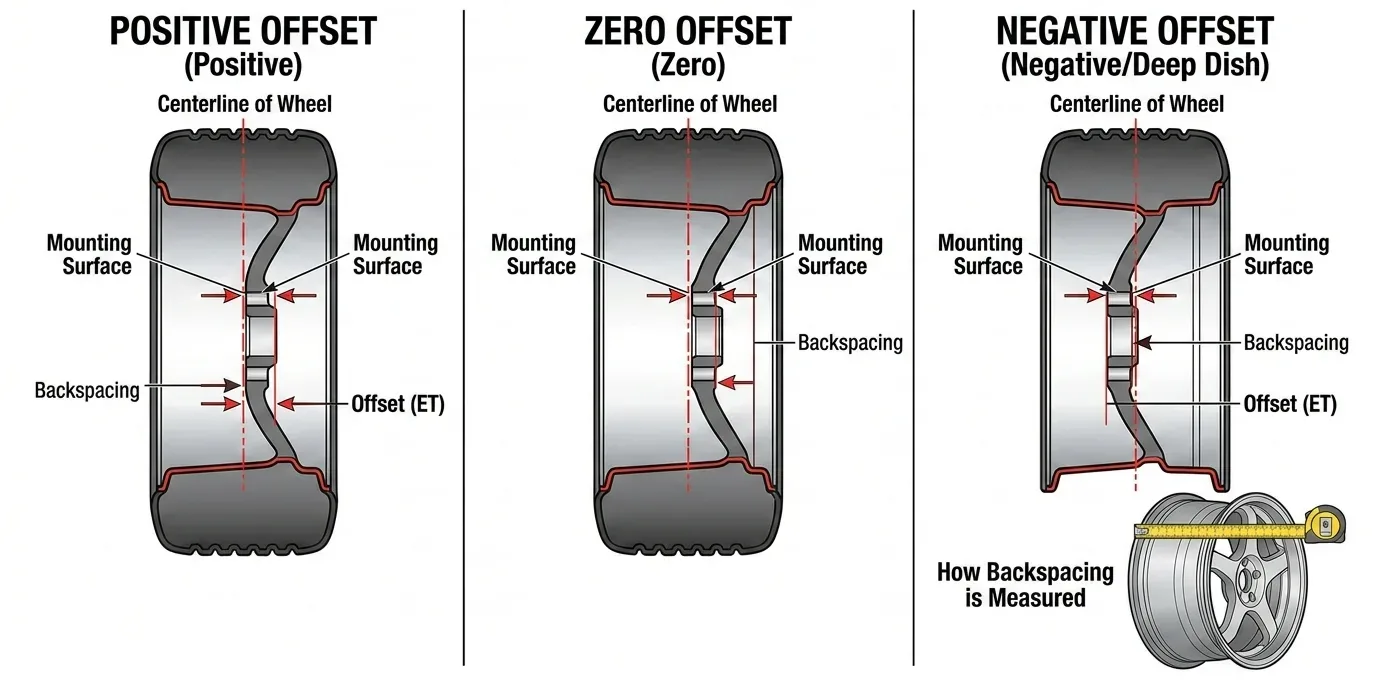
Offset (ET, from the German word Einpresstiefe) is one of the most critical factors in wheel fitment. It is the distance (in millimeters) from the wheel's absolute centerline to the mounting hub face.
- Positive Offset (+ET): The mounting face is toward the front (outside). Common in modern FWD/RWD vehicles.
- Zero Offset (ET0): The mounting face is exactly in the center.
- Negative Offset (-ET): The mounting face is toward the back (inside), creating a "deep dish" look. Common in lifted off-road trucks.
03.Center Bore & Hub-Centricity
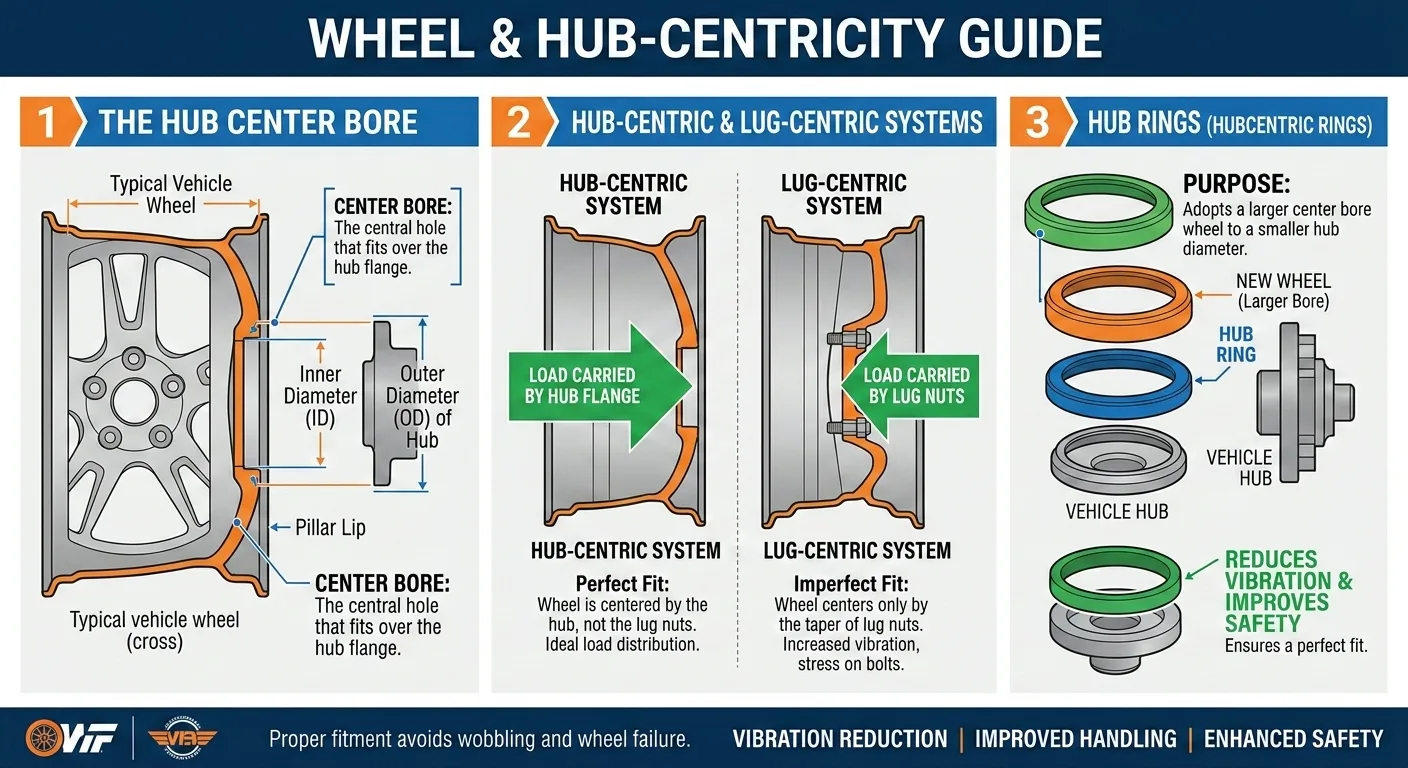
The center bore is the size of the machined hole in the exact center of the wheel that seats on the vehicle's hub.
- Hub-Centric: The wheel's center bore matches the vehicle's hub diameter perfectly, ensuring a vibration-free ride.
- Lug-Centric & Hub Rings: Many aftermarket wheels are manufactured with a larger center bore (e.g., 73.1mm). To make these hub-centric for a specific vehicle, we highly recommend using Hub-Centric Rings.
04.Wheel Size
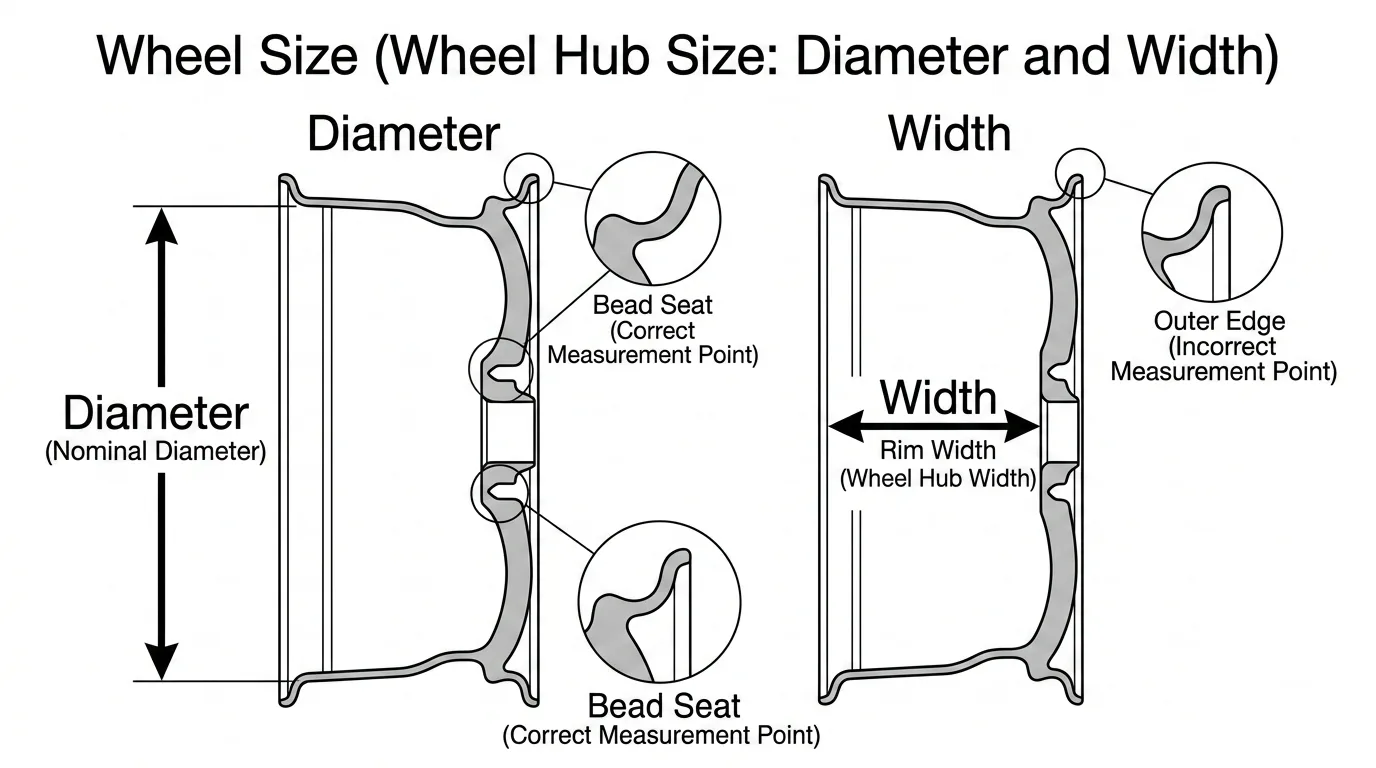
Expressed typically as Diameter x Width (e.g., 19x8.5J).
- Diameter: Total distance across the face.
- Width: Distance between the inside tire bead seats.
CNWR Advantage: We stock a massive range of "Blank Wheels" (un-drilled center pads). This allows our CNC engineering team to custom-drill any PCD to meet your specific regional market demands within days.
05.Brake Clearance
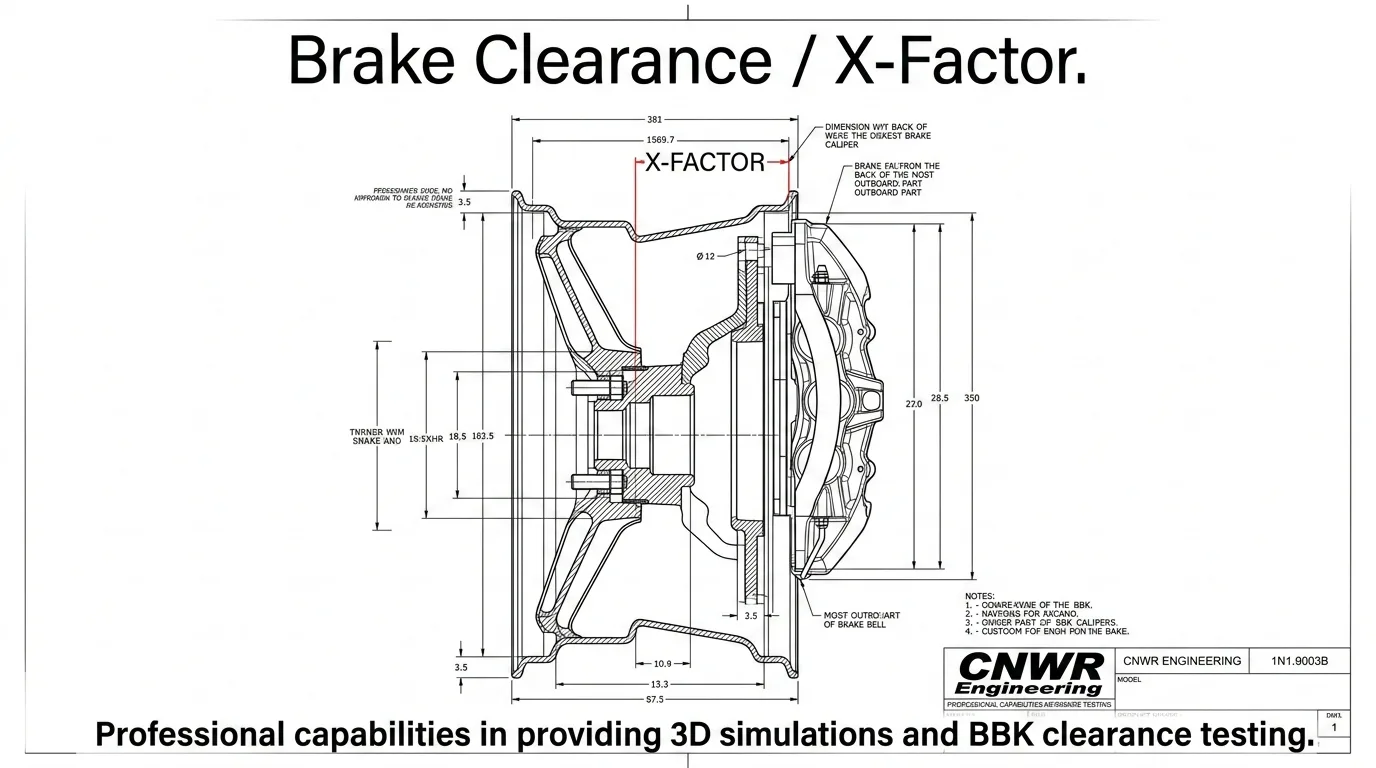
The "X-Factor" refers to the clearance between the back of the wheel spokes and the brake caliper. Offset alone doesn't guarantee clearance.
For Custom BBK (Big Brake Kits), provide us the template. We run 3D simulations prior to manufacturing.
06.Load Rating & Safety
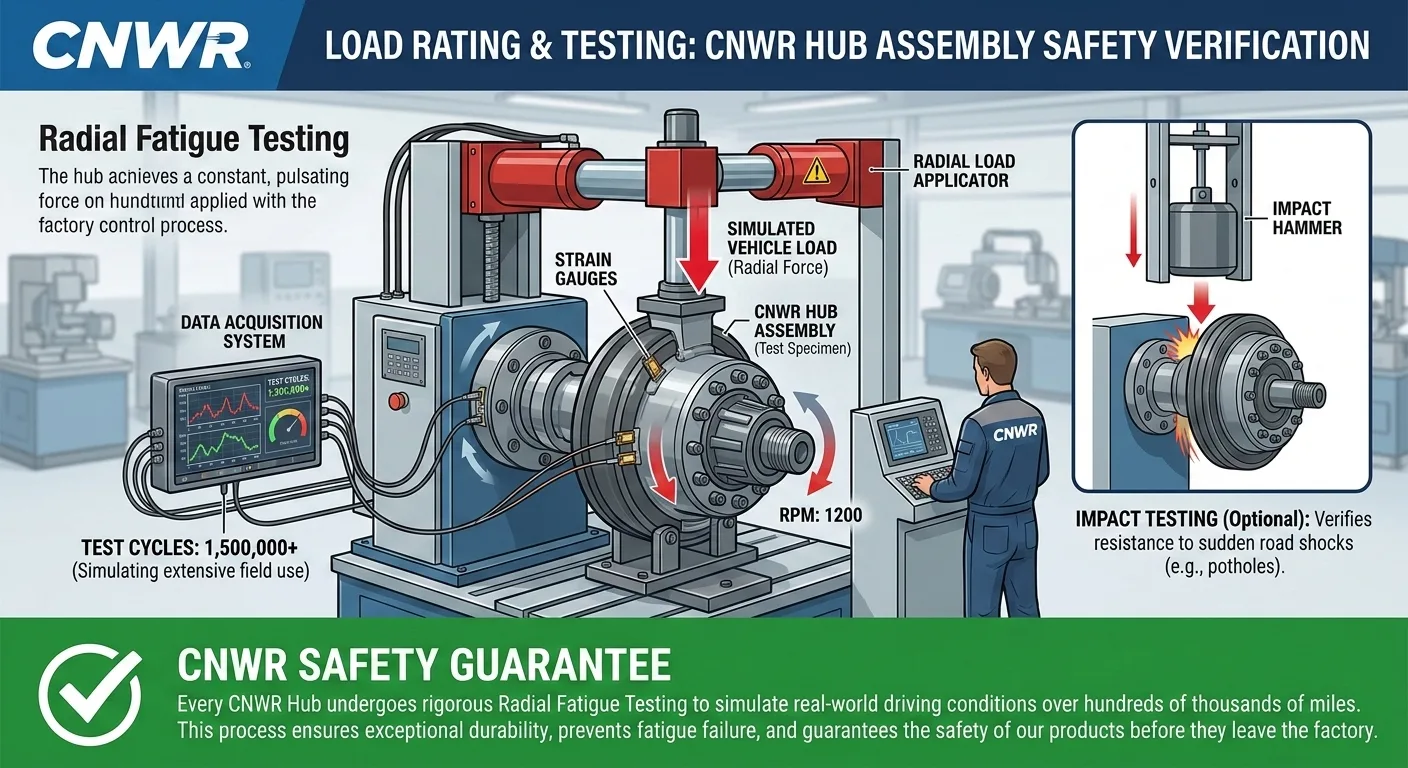
Crucial for B2B safety liability, the load rating dictates the maximum weight each individual wheel can safely support. All CNWR wheels undergo strict radial fatigue and impact testing (VIA/JWL/TUV standards) to guarantee their specified load ratings.
Frequently Asked Questions About Wheel Fitment
Q: What does PCD mean on wheels?
A: PCD stands for Pitch Circle Diameter, commonly known as the bolt pattern. It represents the diameter of the imaginary circle that passes through the center of the wheel's lug holes. For example, a 5x114.3 PCD means the wheel has 5 lug holes evenly spaced on a 114.3mm circle.
Q: What is the difference between wheel offset (ET) and backspacing?
A: Wheel offset (ET) is the distance from the wheel's mounting pad to its true centerline, measured in millimeters. Backspacing is the distance from the back of the mounting pad to the inner lip of the wheel, measured in inches. Both determine how flush the wheel will sit with your vehicle's fenders.
Q: Why do I need hub-centric rings for aftermarket wheels?
A: Aftermarket wheels are often manufactured with a larger center bore to fit multiple vehicle makes. Hub-centric rings fill the gap between the vehicle's hub and the wheel's center bore. This ensures the wheel is perfectly centered, preventing high-speed steering wheel vibrations and lug-centric stress.
Q: What is the X-Factor in wheel fitment?
A: The X-Factor refers to the internal clearance between the back of the wheel's spokes and the vehicle's brake calipers. Ensuring adequate X-Factor is crucial, especially if you are installing Big Brake Kits (BBK), to prevent the wheel spokes from scraping against the calipers.
Q: Why is aftermarket wheel load rating important?
A: The load rating indicates the maximum weight a single wheel can safely carry. It is verified through strict radial fatigue and impact testing standards like VIA, JWL, or TUV. You must ensure the combined load rating of your four wheels meets or exceeds your vehicle's Gross Vehicle Weight Rating (GVWR) for safety.